

What is resveratrol? (and why wine isn’t the answer)
Resveratrol is a polyphenolic antioxidant—a defence molecule plants make under stress. You’ll see two forms on labels: ‘trans’ and ‘cis’. Trans-resveratrol is the more stable and bioactive option for skincare.
Resveratrol is found mainly in red grapes and their skins, making red wine a key dietary source. Japanese knotweed is known for its high concentrations and is commonly used in supplements. Smaller amounts are found in peanuts, blueberries, cranberries, and mulberries, with trace levels present in dark chocolate, cocoa, and pistachios. Foods with dark or red skins generally contain the most resveratrol.
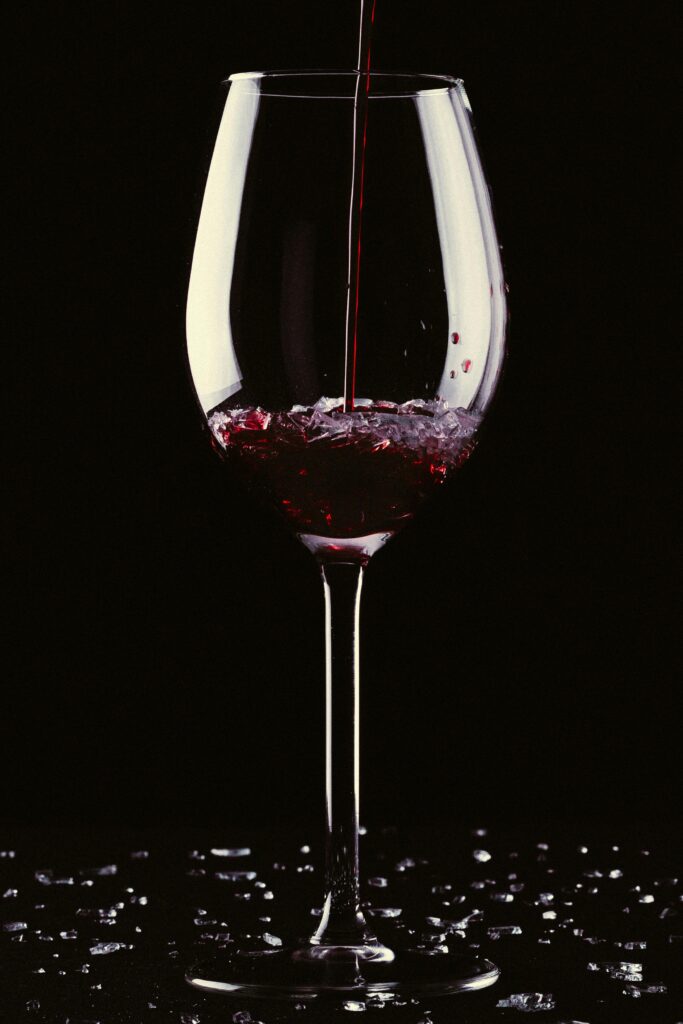
Why not just drink red wine?
Because the amounts are small and your liver rapidly converts resveratrol into other compounds before it reaches the skin in meaningful levels. Topical use targets the epidermis and upper dermis directly, making it much more efficient for skin-related goals.
- What is resveratrol? (and why wine isn’t the answer)
- Mechanisms of Action of Resveratrol in Skincare
- Formulation, Stability, and Penetration of Resveratrol in Skincare
- Best Skin Types and Concerns for Resveratrol
- Potential Risks and Limitations
- Synergistic Combinations
- Choosing the Right Formulation
- How to Apply Resveratrol Products
- Final Thoughts
Mechanisms of Action of Resveratrol in Skincare
Resveratrol is valuable not only for “mopping up” free radicals, but for switching skin signals towards protection and repair.
- Turns on Nrf2 (your cell’s defensive mode)
Think of Nrf2 as a master switch that boosts enzymes that limit oxidative damage after sun exposure. This means less stress on collagen and fewer post-UV damage markers. - Dials down NF-κB and AP-1 (drivers of inflammation and collagen breakdown)
These pathways ramp up cytokines and MMP-1/9, the enzymes that chew through collagen. Resveratrol helps quiet that noise, so breakdown slows. - Supports coordinated wound repair
Encourages fibroblast (skin cell) movement and moderates new-vessel signals in injury models, resulting in faster closure and reduced inflammation in preclinical data. - Acts as a gentle phytoestrogen
At micromolar levels, resveratrol can interact with oestrogen receptors. In low-oestrogen states (peri- or post-menopause), this may support hydration and elasticity.
Science note: When a study says “MMP-1 went down,” it simply means less collagen was being chopped up—good news for firmness and wrinkle depth over time.
What the evidence actually shows
- Preclinical (lab/animal): Strong and consistent signals for photoprotection, reduced MMPs, and improved repair (multiple models).
- Human studies: Small and short-term, but encouraging when formulations keep resveratrol stable and get it into the skin. Modest improvements in elasticity and visible signs have been reported with stabilised blends.
Bottom line on evidence: The science is coherent, but delivery and stability are the make-or-break factors for results you can see.

Pro tip
Pair resveratrol with daily sunscreen. Sunscreens lower the incoming UV. Resveratrol helps the skin manage the oxidative and inflammatory response.
Formulation, Stability, and Penetration of Resveratrol in Skincare
Two constraints limit performance in real products: getting resveratrol into the skin and keeping it intact until it gets there.
Formulation matters (a lot): stability, penetration, packaging
Resveratrol is small (~228 Da) and moderately lipophilic (LogP ~3.3), so it can enter skin—but it’s fragile with light, heat, and oxygen.
What helps it survive and work:
- Phospholipid carriers (liposomes, ethosomes): shield from oxidation and assist penetration.
- Cyclodextrin complexes / polymeric nanoparticles: slow release and reduce breakdown.
- Pro-esters (e.g., resveratryl triacetate): more stable; useful when long shelf-life and low colour change are priorities.
- Slightly acidic systems (often pH ~5–6) and opaque, airtight packaging: pumps or laminated tubes beat jars every time.
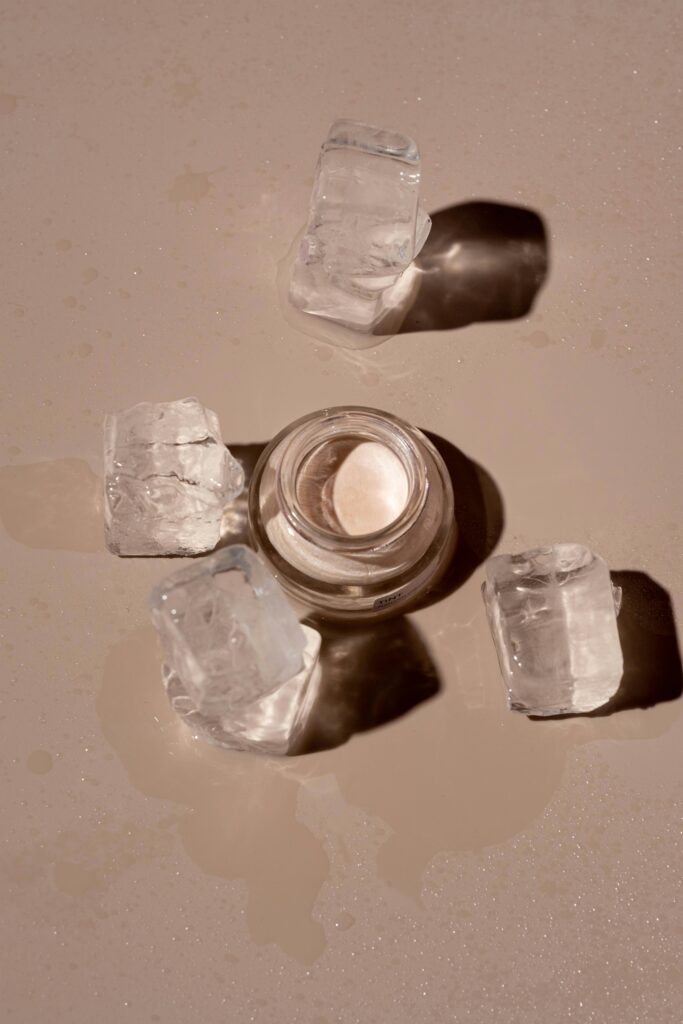
Pro tip: If you can see the product (clear bottle) or dip your fingers into it (jar), resveratrol won’t stay potent for long. Choose dark, air-restricted packaging.
Best Skin Types and Concerns for Resveratrol
Resveratrol seems most useful for people noticing early signs of photoaging: fine lines, mild uneven tone, or dullness from pollution and sun exposure.
Some research also suggests that because it behaves like a plant-derived oestrogen in lab studies, it may be particularly relevant for women in lower-oestrogen states, such as post-menopause.
Sensitive skin can sometimes tolerate resveratrol, especially when it is packaged in delivery systems designed to reduce irritation. For people prone to post-inflammatory hyperpigmentation, formulas that combine resveratrol with niacinamide or stable vitamin C derivatives may offer both antioxidant support and visible brightening.
Pro tip: If pigmentation is a key concern, check if your product uses resveratrol alongside ingredients known to target melanin pathways like niacinamide, vitamin C or arbutin.
Potential Risks and Limitations
Most people tolerate resveratrol well in cosmetics, but there are important caveats:
- Irritation: Higher concentrations in poorly designed vehicles can sting or cause redness.
- Instability: Resveratrol breaks down quickly when exposed to light, air, or heat, which means a degraded product may do very little.
- Evidence gaps: Human clinical trials are still relatively small. While lab results look promising, that doesn’t guarantee every user will notice benefits.
| Risk | How to Minimise |
| Oxidative degradation | Choose opaque, air-tight packaging |
| Irritation potential | Start with lower strengths and pair with a barrier-supportive moisturiser |
| Limited long-term data | Set realistic expectations and track results over months, not weeks |
Key takeaway: Resveratrol is safe for most, but don’t expect instant or dramatic results. Consistency and formulation quality matter more than concentration.
Synergistic Combinations
Pairing resveratrol with sunscreen is one of the smartest moves. Sunscreen blocks UV rays, while resveratrol helps neutralise oxidative stress that sneaks through. In anti-aging routines, combining it with retinoids or peptides makes sense: retinoids encourage collagen renewal, peptides support skin structure, and resveratrol tackles inflammation and free radical damage.
Pro tip: Think of resveratrol as an enhancer, not a solo act. It works best layered into a broader routine.
Choosing the Right Formulation
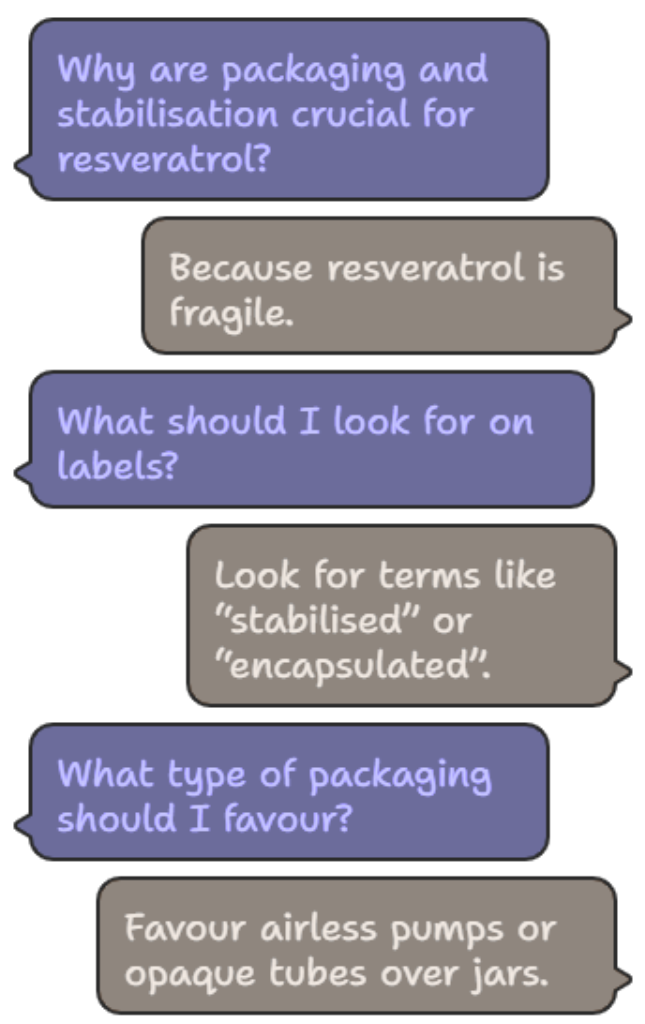
Because resveratrol is fragile, packaging and stabilisation are crucial.
- Look for terms like “stabilised” or “encapsulated” on labels.
- Favour airless pumps or opaque tubes over jars.
- For pigmentation concerns, sesveratrol esters or similar derivatives may offer additional brightening potential.
How to Apply Resveratrol Products
Apply resveratrol after cleansing and before heavier creams or oils.
- Morning use + SPF: maximises its antioxidant and photoprotective role.
- Evening use: complements repair-focused routines.
Visible changes usually require consistent use over several months.
Pro tip: Track your skin with photos every 4–6 weeks. Subtle improvements can be hard to notice day-to-day.
Final Thoughts
Resveratrol has carved out a place as a supporting antioxidant in skincare. Laboratory and early clinical studies show potential, but it isn’t a silver bullet. Its actual value comes when it is part of a stable formulation and combined with proven essentials like sunscreen and moisturisers.
Next step: Review your current routine. Ask yourself where a stable antioxidant fits, and whether resveratrol’s properties match your personal skin goals.
Talk to you soon!
Dr Bozica
References:
https://pubs.rsc.org/en/content/articlehtml/2017/fo/c7fo01086a