Party season skin isn’t in your head
Let me describe a scene most of us recognise.
December (Yay!). Life gets louder. More meals blur into one another, more social plans squeezed into already full weeks, more late nights, more rushing. Somewhere in the middle of that, you catch your reflection and think: My skin doesn’t look like it should.
That reaction is incredibly common, and it’s not because you suddenly forgot how to look after your skin. It’s because party season tends to apply pressure on all biological systems all at once.
Skin is a living organ that responds to what’s happening in your body and your nervous system. When sugar, stress and alcohol intake rise, skin (like all other organs) has to adjust. Often, it becomes more reactive, slower to recover, and less forgiving of things it normally tolerates.
What we’re doing here is making that response understandable. Once you see the pattern, you can work with your skin instead of fighting it.
- Party season skin isn’t in your head
- The short version before we zoom in
- What you might notice in the mirror and why it makes sense
- Sugar, glycation, and the skin’s support system
- Stress and skin: how thoughts become signals
- Neurogenic inflammation: why skin can feel irritated before it looks irritated
- Alcohol and skin: more than flushing
- Why these factors stack instead of acting alone
- What skin actually needs during party season
- What to look for in formulations when skin is under load
- Routine compatibility matters more than new actives
- How to think about skincare timing during party season
- Bringing it all together
- Support your skin, don’t punish it
The short version before we zoom in
Think of party season as a period of higher load.
This is not the time for dramatic routine changes or aggressive treatments. It’s the time it benefits from support and consistency.
Here’s what the science behind this topic consistently shows:
Sustained high sugar intake can increase the buildup of sugar-derived compounds in skin and is linked to changes in the proteins that give skin its structure and resilience. In experimental models, this is associated with thinner skin layers and reduced organisation.
Psychological stress does not stay in your head. Stress signals travel through hormones, nerves, and immune messengers that directly interact with skin cells. When stress is ongoing, those signals can push skin toward inflammation and sensitivity.
Alcohol affects skin through blood vessels, immune signalling, and oxidative stress. For some people, that shows up as flushing or redness. For others, it lowers the threshold for irritation or flare-ups.
What this does not mean is that one night out damages your skin. Skin is remarkably adaptive. What matters is repetition over weeks, especially when several of these factors overlap.
What you might notice in the mirror and why it makes sense
People often describe “holiday skin” in simple, practical terms. It looks dull. It reacts faster. It feels tight one day and oily the next. Sometimes it itches or stings when products that normally feel fine are applied.
Those observations line up surprisingly well with what we know about skin biology under stress.
When blood vessels become more reactive, redness appears more easily and lasts longer. When inflammatory signals are amplified, skin sensations like stinging or itch can escalate faster. When the skin’s support framework is under strain, light reflects differently, which we interpret as dullness or uneven tone.
Here’s a way to connect symptoms with likely processes.
| What you notice | What may be happening in the skin | Why party season contributes |
| Redness or flushing | Blood vessels are opening more easily and inflammatory signals are higher | Alcohol and stress both affect vascular and immune signalling |
| Skin feels dry but looks shiny | The barrier is struggling to regulate water and surface oils | Late nights, cleansing more often, and metabolic stress can all contribute |
| Dull or yellow-toned appearance | Structural proteins and sugar-related byproducts affect how light reflects from skin | Higher sugar intake over several weeks |
| Itch or heightened sensitivity | Nerve-related inflammation becomes easier to trigger | Ongoing stress increases nerve–immune communication |
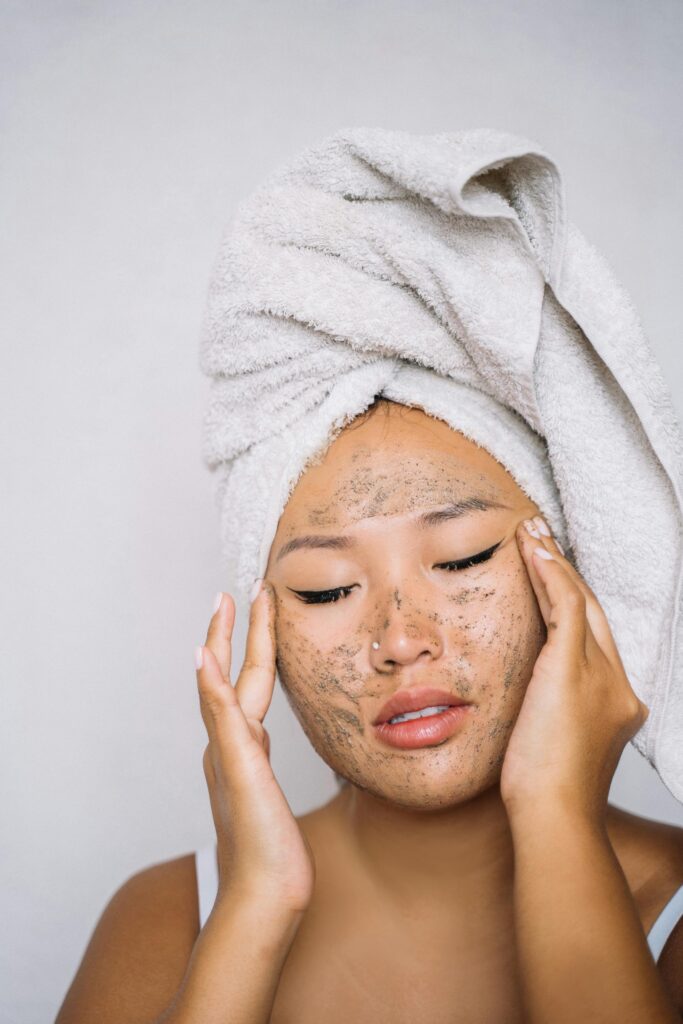
Pro tip: If itch shows up before visible irritation, that’s often a sign nerves and immune cells are more reactive. Scrubbing or exfoliating tends to make that worse, not better.
Sugar, glycation, and the skin’s support system
Sugar and skin ageing are often discussed in vague terms, but there is actual science behind it.
When sugar intake stays high, more sugar-derived byproducts form in the body. Some of these accumulate in the skin. In experimental settings, that buildup is linked to changes in the proteins (including collagen) that act like scaffolding inside skin.
Think of the extracellular matrix as the framework in which skin cells live. It helps cells stay organised, communicate, and repair everyday wear and tear. When that framework weakens or sends poorer signals, skin can become thinner, less resilient, and slower to bounce back.
In controlled experiments where animals were fed a high-sugar diet for several weeks, skin showed:
- More sugar-related compounds within skin tissue
- Lower levels of key structural proteins
- Less organised skin layers under the microscope
- Changes in how well skin retained water
This does not mean sugar is instantly visible on your face. Skin does not work on a meal-by-meal basis. It responds to long-term habits.
A helpful way to think about it:
One indulgent day is noise. Several weeks of frequent high sugar intake is a signal.
During party season, many people unknowingly cross that threshold. When that happens alongside stress and alcohol exposure, skin has fewer resources left for repair.
Pro tip: If December includes frequent celebrations, treat your routine as if your skin’s recovery speed is slightly reduced. Gentle cleansing, consistent moisturising, and fewer aggressive treatments usually pay off.
Key takeaway: In experimental models, long-term high sugar intake alters skin structure and signalling. That helps explain why skin can look duller and feel more fragile after holidays.
Stress and skin: how thoughts become signals
Let’s clear something up early. When dermatologists talk about stress and skin, they are not talking about attitude, mindset, or resilience in the motivational sense. They are talking about chemistry and signalling.
When you’re under ongoing psychological stress, your body activates several linked systems. Hormones are released, nerves fire, and immune messengers shift their behaviour. Skin is wired into all of this. It has blood vessels, nerves, immune cells, and its own local stress-response machinery.

Stress does not stay in your head. It is translated into signals that skin cells can read.
One of the key differences that matters for skin is whether stress is short-lived or sustained. Short bursts of stress are part of normal life and usually resolve cleanly. When stress stretches across weeks, the signalling pattern changes. Baseline stress hormones stay higher, nerve signalling becomes more reactive, and immune balance shifts.
For skin, this often means a lower threshold for inflammation. Sensations like itching, stinging, or burning can appear earlier. Redness can escalate more quickly. Existing inflammatory conditions may flare more easily.
This helps explain a common experience during party season: skin that feels reactive even when you haven’t changed products.
Pro tip: If your skin starts reacting to products you’ve tolerated for months, pause before assuming the product is the problem. Under stress, skin’s reactivity window narrows.
Neurogenic inflammation: why skin can feel irritated before it looks irritated
A useful concept here is neurogenic inflammation. This is inflammation driven by nerve signalling rather than direct injury or infection.
Skin is densely supplied with sensory nerves. Under sustained stress, these nerves release signalling molecules that interact closely with immune cells in the skin. Mast cells, in particular, respond strongly to nerve-derived signals.
When this pathway is more active, skin can:
- Itch before a rash is visible
- Sting when products are applied
- Flush in response to heat, emotion, or alcohol
During busy, socially demanding periods, nerve–immune communication tends to be more active. That’s one reason why party season skin often feels uncomfortable before anything obvious appears on the surface.
Key takeaway: Early irritation is often a nerve signal, not a surface problem. Treating it gently gives skin a chance to settle before visible inflammation develops.
Alcohol and skin: more than flushing
Alcohol’s effects on skin are often reduced to redness, but the biology is broader.
Alcohol and its breakdown products influence skin through several pathways. Blood vessels become more permeable, which makes flushing easier to trigger. Inflammatory signalling increases. Oxidative stress rises as alcohol is metabolised.
For some people, this combination shows up as transient redness. For others, it lowers the threshold for flare-ups of conditions that already involve inflammation, such as rosacea, eczema, or acne-prone skin.
Research looking across different skin conditions shows mixed effects. Alcohol is not a universal trigger, and responses vary widely. What is consistent is that higher intake places additional demands on skin’s repair and immune balance.
This is why alcohol often acts as an amplifier rather than a sole cause. When skin is already under pressure from stress or dietary changes, alcohol can push it past its comfort zone.
Pro tip: If you notice skin reactions after drinking, spacing drinks out and alternating with water often reduces the intensity of flushing and next-day sensitivity.
Why these factors stack instead of acting alone
Sugar, stress, and alcohol are often discussed separately. In real life, they overlap.
During party season, sugar intake rises, stress stays elevated, and alcohol exposure increases within the same weeks. Each of these influences skin through different pathways, but they converge on a similar outcome: reduced tolerance and slower recovery.
Sugar-related byproducts affect skin structure and repair signals. Stress shifts nerve and immune communication. Alcohol increases inflammatory load and vascular reactivity.
When these occur together, skin has fewer resources available to buffer everyday challenges like cleansing, makeup, heat, and environmental exposure.
This is why party season skin can feel unpredictable. It’s not that skin has become fragile. It’s that it’s operating closer to its limits.
Key takeaway: When multiple pressures stack, the most effective strategy is to reduce friction. Simple routines, barrier-supportive care, and patience usually outperform aggressive fixes.
Key takeaway: When multiple pressures stack, the most effective strategy is to reduce friction. Simple routines, barrier-supportive care, and patience usually outperform aggressive fixes.
What skin actually needs during party season
Once you understand what’s happening under the surface, skincare choices become simpler.
During party season, skin is often dealing with higher inflammatory signalling, more nerve activity, and slower structural repair. In that context, skin doesn’t need to be pushed harder. It needs help staying stable.
From a skin biology perspective, three needs rise to the top.
First, barrier support. The outer layers of skin rely on an organised mix of lipids to regulate water loss and protect deeper layers. When stress and metabolic load are higher, this system becomes easier to disrupt. Supporting it helps everything else work better.
Second, inflammation modulation. This does not mean shutting inflammation down completely. Inflammation is part of normal defence and repair. The goal is to prevent unnecessary escalation, especially the kind driven by nerves and stress signalling.
Third, predictable recovery. Skin repairs itself through cell turnover, protein synthesis, and organised signalling. When those processes slow, consistent care matters more than strong interventions.
In everyday terms, party season skin benefits from products that feel boring in the best possible way.
What to look for in formulations when skin is under load
Formulation matters just as much as ingredients.
When skin is reactive, how a product delivers its ingredients often determines whether it soothes or irritates.
Well-designed formulas during this period tend to share a few characteristics.
They support the lipid barrier rather than stripping it. They spread easily without requiring excessive rubbing. They avoid unnecessary sensory triggers that can activate nerve endings.
From cosmetic dermatology principles, emulsions that mimic skin’s natural lipid organisation are generally better tolerated when barrier function is under strain. Gentle humectants help hold water in the skin without pulling it out from deeper layers. Anti-inflammatory support works best when it’s steady and low irritation rather than intense.
This is not the season for chasing instant visible changes. It’s the season for helping skin return to baseline more reliably.
Pro tip: If a product tingles during party season but didn’t before, that doesn’t automatically mean the product is “working.” It often means skin’s sensory threshold is lower.
Routine compatibility matters more than new actives
Another common December mistake is layering too many corrective steps at once.
Under normal conditions, skin can compensate for a lot. Under cumulative stress, its margin for error shrinks.
Certain combinations become harder to tolerate when skin is already reactive:
- Frequent exfoliation layered with alcohol exposure and poor sleep
- Strong actives applied to skin that already feels itchy or tight
- Over-cleansing followed by lightweight moisturisers that don’t replenish barrier lipids
These are not permanent incompatibilities. They’re timing issues.
Key takeaway: When skin feels unpredictable, reducing steps often improves outcomes faster than adding new ones.
How to think about skincare timing during party season
Instead of asking, “What should I add?” it’s often more helpful to ask, “What can wait?”
Aggressive exfoliation, new treatment serums, and major routine changes are better introduced when skin has spare capacity. Party season usually isn’t that moment.
Skin that is already managing dietary changes, stress signalling, and alcohol-related inflammation has fewer resources available for adaptation. Giving it time to stabilise often leads to better long-term results.
This approach aligns with what we see in both experimental skin research and clinical dermatology: stability supports repair.
Bringing it all together
Party season doesn’t damage skin because you’re doing something wrong.
It shows up on skin because skin is honest about what it’s dealing with.
Higher sugar intake affects structural proteins over time. Stress alters nerve and immune communication. Alcohol increases inflammatory load and vascular reactivity. When these overlap, skin becomes less tolerant and slower to recover.
Understanding this shifts the goal. The aim isn’t perfect skin through restraint. It’s resilient skin through informed support.
Support your skin, don’t punish it
If your skin feels different in December, treat that as information, not failure.
Choose routines that prioritise barrier comfort and predictability. Give skin fewer reasons to escalate. Let recovery catch up before asking for visible change.
If this helped you understand your skin a little better, you’ll enjoy what I share by email. I write about skin the same way I do here: clear biology, real evidence, and practical guidance you can actually use.
Subscribe to DrBeautiology and let the science come to you.
Talk to you soon!
Dr Bozica