Retinol is one of the most researched skincare ingredients available without a prescription. It’s often marketed as a fix-all: fewer wrinkles, smoother texture, brighter tone. And while it can do all of those things, many people give up before they see any benefit.
Why?
Because using retinol effectively is less about choosing the strongest product, and more about knowing how your skin responds to it. The real issue isn’t that retinol doesn’t work. It’s that most people use it in ways that make it harder for their skin to tolerate—or benefit from—it.
This blog is for you if you’ve ever:
- Quit using retinol because of flaking, redness, or stinging.
- Bought a 1% serum, thinking it must work faster.
- Wondered if it’s worth it when nothing seems to change.
Together, we’ll cut through confusion and build a practical, evidence-based approach that helps you use retinol with confidence.
Let’s start with the most common mistake people make.
Mistake 1: Using High-Dose Retinol From Day One
It’s easy to assume that more is better. After all, 1% sounds like it must be stronger and faster than 0.3%, right? In skincare, more is often not better. Pushing your skin too hard, too soon often leads to irritation—and ironically, slower progress.
What the Research Shows
In a 2022 study by Mellody et al., 0.3% retinol applied for just 12 days led to measurable improvements in skin structure. Biopsies showed thicker epidermis and more fibrillin-rich microfibrils in the dermis—changes associated with firmer, smoother skin. Importantly, these changes occurred without triggering visible irritation.
Meanwhile, higher concentrations (like 1%) often cause peeling, redness, and discomfort without offering significantly better results, especially in the first few months of use. In practice, this means people either stop using it—or dilute its effect by applying it less often.
| Retinol % | Structural Changes | Tolerability | Recommended For |
| 0.1% | Mild improvements | High | Beginners, sensitive skin |
| 0.3% | Significant changes | Good | Most users |
| 1.0% | Similar effects, more side effects | Low | Only after tolerance is established |
If you’re just starting out, use a low concentration every third night, then slowly increase frequency as your skin adjusts. Most people do well with 0.3% used 2–4 times per week. You’ll likely see improvements within 8 to 12 weeks—without the irritation that can derail your progress.
Mistake 2: Overlooking the Importance of Formulation
Retinol doesn’t work in isolation. How it’s formulated—and how that formulation is stored—determines whether it stays active, penetrates properly, and causes irritation.
The Science Behind It
Retinol is chemically fragile. It breaks down easily in the presence of air, light, and heat. According to Harry’s Cosmeticology, it’s one of the most unstable active ingredients used in over-the-counter skincare. Without stabilisation, the active content of a retinol product can drop sharply before you’ve even opened the lid.
To remain effective, retinol formulations need:
- Oxygen-impermeable packaging (e.g. airless pumps, opaque tubes)
- Antioxidants (like vitamin E or ferulic acid) to slow degradation
- Encapsulation or emulsifier systems to protect it through skin penetration
One common workaround in budget or mass-market products is to use retinyl esters—like retinyl palmitate or retinyl propionate. These are more stable, but they need to undergo several conversions in the skin before becoming active retinoic acid. That means slower and weaker results, unless paired with other synergistic ingredients like niacinamide or peptides.
| Retinoid Type | Stability | Activity Level | Notes |
| Retinoic acid (Tretinoin, ATRA) | Low | High | Prescription-only, often irritating |
| Retinol | Moderate | Moderate | Proven, effective with proper formulation |
| Retinaldehyde | Better | Moderate | Effective and usually well tolerated |
| Retinyl esters | High | Low | Stable but require conversion in skin |
What This Means Practically
Don’t judge a product solely by its percentage. A well-formulated 0.3% retinol in an airless tube will outperform a 1% serum in a clear glass dropper bottle exposed to your bathroom light.
Products that combine stabilised retinol with barrier-supporting ingredients—like ceramides, glycerin, and niacinamide—tend to reduce irritation and improve results over time.
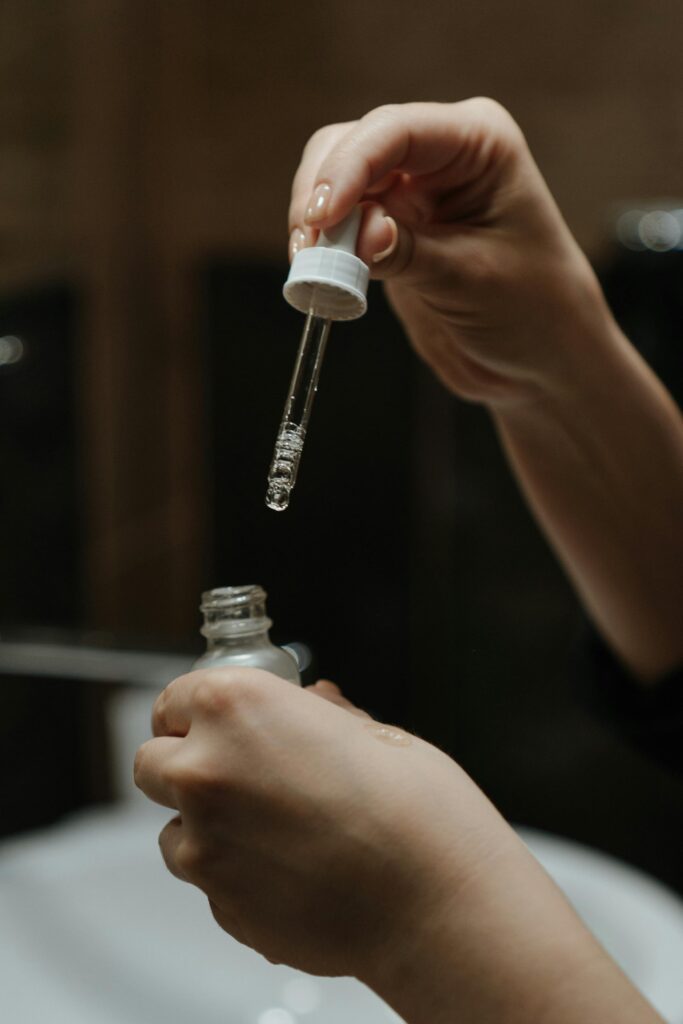
If your retinol product has changed colour, smells sharp or rancid, or is stored in a jar or clear bottle, it may have degraded. Look for products in opaque packaging with clear stability testing if available.
Mistake 3: Pairing Retinol With Ingredients That Work Against It
Many people apply retinol alongside every active they own, hoping for faster results. In reality, some ingredients make retinol harder for the skin to tolerate, while others interfere with how effectively it works. Understanding these interactions helps you get results with less irritation.
How the skin responds
Retinoids make your skin cells renew faster. While your skin is adjusting to that faster turnover, the protective barrier can be a bit more fragile. If you use strong exfoliants or “reactive” ingredients (like harsh acids or oxidisers) at the same time, you’re more likely to get stinging, redness, or peeling.
Acids such as glycolic or salicylic reduce the skin’s pH. This lower pH can heighten the sting many people feel when they first introduce retinol. Benzoyl peroxide can degrade retinol in certain formulations. Physical scrubs add friction at a time when the epidermis is already renewing itself more quickly.
| Ingredient | Works Well With Retinol? | What the Research Suggests |
| AHAs (glycolic, lactic) | Usually not together | Better used on separate nights to reduce irritation. |
| BHAs (salicylic acid) | Sometimes | Combining can be uncomfortable; spacing applications helps. |
| Benzoyl peroxide | Often poor | Can reduce retinol activity depending on the formulation. |
| Vitamin C (ascorbic acid) | Variable | Effective when used at a different time of day. |
| Niacinamide | Good | Supports barrier function and helps reduce redness. |
| Peptides | Good | Can be used in the same routine without conflict. |
Pro tip
If you use exfoliating acids, apply them on nights when you are not using retinol. This helps the skin adjust while still supporting clarity and texture.
Retinol performs best when paired with ingredients that help the barrier stay comfortable. Support from niacinamide, ceramides and glycerin makes retinol easier to tolerate.
Mistake 4: Forgetting Sun Protection While Using Retinol
Many people think retinol thins the skin, but studies show it usually does the opposite. Over time, retinoids can thicken the outer living layer of skin by encouraging skin cells to grow and renew. For a full breakdown of this myth, click here.
The catch is that faster renewal can make skin more UV-sensitive, especially early on. That’s why daily sunscreen matters when you use retinoids.
What the research shows
UV light is the main driver of collagen and elastin damage. It breaks down collagen, disrupts elastin, and leads to that thick, disordered “sun-damaged” elastic tissue. Retinol can help by boosting collagen building and dialing down collagen-degrading enzymes. But without daily sunscreen, UV keeps causing new damage, so the improvements don’t last.
In clinical trials, participants using retinol or retinoic acid consistently avoid excess sun exposure. Even brief ultraviolet exposure can slow or reverse improvements in texture and fine lines.
Apply a broad-spectrum SPF every morning. This protects the collagen you are working hard to rebuild and keeps pigmentation more even.
Mistake 5: Expecting Retinol Results Too Quickly
Retinol influences how cells behave. It affects gene expression, enzyme activity and the way skin cells mature. These changes take time, and expecting overnight transformation leads many people to abandon treatment before it has had a chance to work.
What the research shows
In studies of naturally aged skin, people can start seeing small improvements in fine lines after about four weeks of consistent retinol use, with continued improvement over six months. Biopsies support this timeline: increases in water-binding molecules called glycosaminoglycans (GAGs)—such as hyaluronic acid, dermatan sulfate, and chondroitin sulfate—and stimulation of procollagen I are seen after months of treatment, not days.
These changes tend to happen in a sequence. First, skin often feels smoother because GAGs hold water. Later, epidermal thickness improves. Visible changes in fine lines usually appear after sustained use.
Fun fact
Glycosaminoglycans can hold large amounts of water. When retinol increases their production, skin often feels more hydrated even before deeper structural improvements occur.

Assess changes at the three‑month mark rather than the three‑week mark.
Key takeaway
Retinol reshapes the skin gradually. Consistency is more effective than increasing strength.
Retinol Works Best When You Work With Your Skin
Clinical studies and biopsy data show that retinol can improve epidermal thickness, support collagen production, and smooth overall texture. These benefits are most consistent when you give your skin time and reduce avoidable stress.
The aim isn’t to push your skin to the limit. It’s to help it adapt. Use a concentration you can tolerate, choose a well-formulated product, avoid pairing it with irritating actives, wear sunscreen every day, and stay consistent. Done this way, retinol becomes a reliable long-term tool.
Hope this helps!
Talk to you soon!
Dr Bozica