Is it okay to use retinol everyday?
If you read enough skincare advice, it can start to feel as though using retinol every day is the baseline for doing things properly. Anything less is often framed as hesitation or lack of commitment.
The evidence does not support that view. Daily retinol use is not required for skin improvement, and for many people it reduces long-term benefit rather than improving it.
To understand why, we need to look at how retinol behaves in skin, how studies are actually designed, and what limits real-world use.
Where the idea of daily retinol comes from
Most of the expectation around daily use comes from prescription retinoic acid, also known as tretinoin. Tretinoin is already in its active form, so it binds directly to receptors inside skin cells that regulate cell division, differentiation, and collagen maintenance.
Because of this direct activity, tretinoin has shown strong effects in studies on photoaged and acne-prone skin. It has also consistently produced irritation, dryness, peeling, and increased sensitivity to ultraviolet light.
Tretinoin works immediately because it is already in its active form. Retinol is a precursor. Your skin has to convert it, step by step, into retinoic acid before it can do anything useful. That built-in delay softens the signal, which explains why retinol usually feels gentler on the skin.
Daily use is therefore not a biological requirement. It is a historical carry-over from a different molecule.
Retinol does not act immediately on application
It must be converted inside the skin into retinoic acid before it can influence cell behaviour.
What studies on retinol frequency actually show
One of the most informative clinical trials on cosmetic retinol examined naturally aged skin over six months. Participants used a 0.4% retinol lotion up to three times per week, not daily. Even with this schedule, researchers observed visible improvements alongside increases in skin components involved in structure and hydration.
Two details from this study are important. First, results occurred without daily application. Second, the formulation was carefully protected from light and heat to prevent retinol breakdown. This tells us that dose quality and consistency over time mattered more than application frequency.
Retinol and retinoic acid (tretinoin) activate the same internal pathways in skin. Both increase epidermal renewal and influence genes linked to collagen production. Retinoic acid produces stronger effects at the same concentration, but it also causes more irritation. Retinol produces similar changes more gradually.
To learn more about retinol in skincare, check out Retinol in Skincare: How to use based on science evidence
Non-daily retinol use has produced measurable skin improvement in studies
Clinical trials have shown visible and biological changes with application schedules below daily use.
Irritation is not proof that retinol is working
Retinoids improve skin because they regulate how skin cells grow, mature, and organise themselves. They also reduce the activity of enzymes that break down collagen while supporting production of new structural proteins.
Irritation is a side effect of overstimulation. It is not a requirement for these processes to occur. In dermatology literature, irritation is repeatedly identified as a major reason people stop using retinoids. Once use stops, benefits decline.
If you have sensitive skin, you may be interested in Retinol vs. Bakuchiol: Which One Truly Works for Your Skin?

Irritation leads to less retinol overall
When skin feels sore or stings, people stop using retinol. Fewer applications mean less benefit over time.
Why retinoid type changes the frequency equation
Retinoids exist on a spectrum of activity. Retinoic acid (tretinoin) is the most potent because it requires no conversion. Retinaldehyde and retinol require enzymatic steps inside the skin, which reduce intensity. Retinyl esters require several conversion steps and generally produce milder effects when used alone.
As activity increases, irritation risk increases. This relationship is well established. It means that frequency must always be adjusted to the specific retinoid and to the person using it. There is no single schedule that fits all skin types or all retinoid forms.
Retinoid strength and tolerance rise together
Stronger retinoids deliver a stronger effect but also increase the risk of barrier disruption.
Why you should not “push through” daily retinol use
In practice, daily retinol use frequently leads to persistent dryness, stinging, or sensitivity. When the skin barrier is disrupted, even basic products can burn. Most people respond by stopping retinol temporarily, then restarting once the skin settles.
This cycle delivers less cumulative exposure than a lower frequency that the skin can tolerate continuously. The issue is not effort. Skin needs time to repair between retinoid signals, especially in dry, sensitive, or mature skin.
Formulation stability matters as much as the schedule
Retinoids are chemically unstable. Light, oxygen, and heat degrade them. When degradation occurs, effectiveness drops while irritation risk can remain.
For this reason, clinical studies tightly control packaging and storage. Modern formulations may use specialised delivery systems to protect retinoids and reduce irritation, but even these approaches require cautious interpretation. Improved stability does not override the limits of skin tolerance.
Always look for opaque, airless packaging.
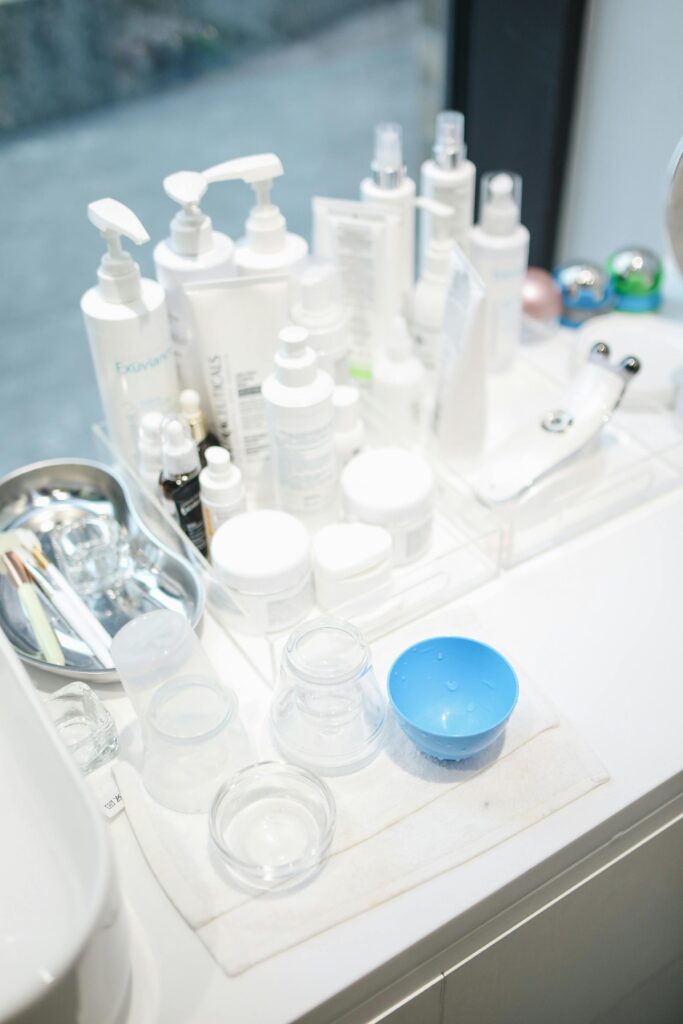
Formulation stability influences outcomes as much as frequency
Retinol that degrades from light or heat loses effectiveness regardless of how often it is applied.
A better way to think about retinol frequency
A more useful question than “Is it okay to use retinol everyday?” is:
How often can my skin respond to retinol without becoming persistently irritated?
For some people, that may eventually be daily use. For many others, it is two or three times per week. The evidence shows that non-daily schedules can support meaningful skin change when they are maintained consistently.
The bigger picture
Retinol remains one of the best-studied cosmetic ingredients available. Its value lies in its ability to guide skin behaviour over time, not in how frequently it is applied.
Skin improves when signals are delivered at a pace it can adapt to. Daily retinol is optional. Sustained use is essential.
Dr Bozica