

You can drink it, take it as a capsule or apply it to your face. But which one is the best for acne?
Your skin receives something quite different from each one.
Green tea contains catechins, including epigallocatechin-3-gallate, usually shortened to EGCG. Researchers have studied EGCG because it can affect sebum production and inflammatory signalling in laboratory models. Human studies are the part that should guide what you buy, and there are far fewer of them than the number of green tea skincare products would suggest.
If I were choosing between drinking green tea, taking a supplement and applying it to my face, I would only consider the topical option for acne. The topical studies suggest a modest benefit for red, inflamed spots. Ordinary brewed tea has barely been tested, while concentrated supplements produced little improvement at a dose that raises a separate safety concern.
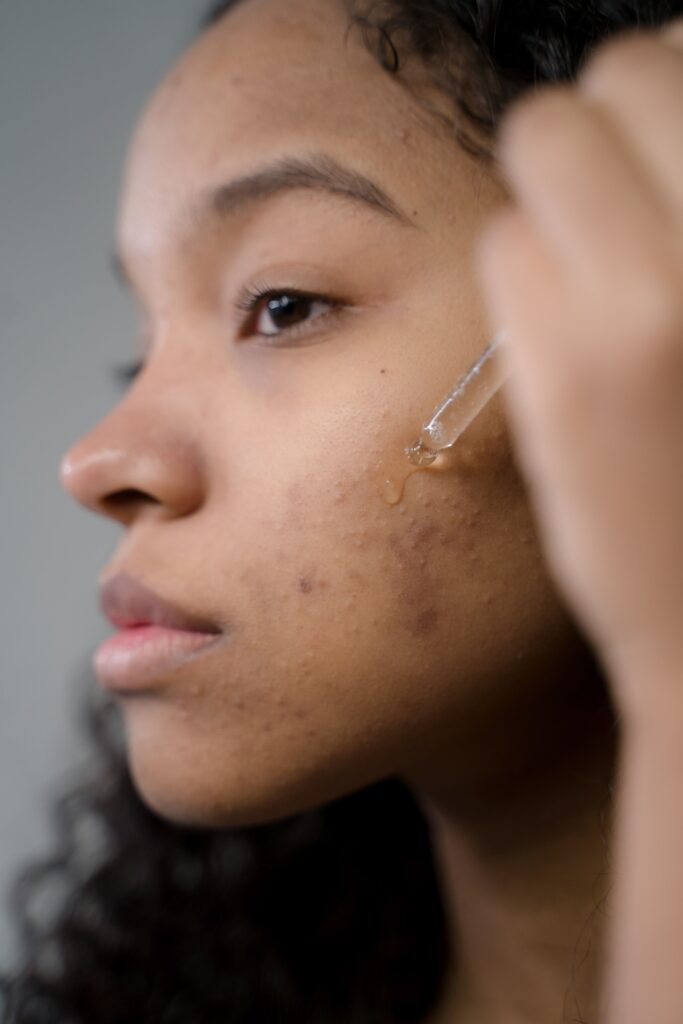
Green tea can sit beside an established acne treatment. I would not build the routine around it.
Green Tea for Acne: What Have Researchers Tested?
| Form | What researchers tested | What happened | What this means when you are shopping |
|---|---|---|---|
| Brewed green tea | Ordinary cups of tea were not used in the acne trials discussed here | We have no dependable answer | Drinking green tea should not be sold as an acne treatment |
| Green tea extract capsules | Concentrated extract taken every day | The improvement was small and inconsistent | A capsule offers little reason to accept a high systemic dose |
| Topical green tea or EGCG | Leave-on preparations applied to acne-prone skin | Some studies found fewer inflamed spots | The extract, concentration and finished formula need closer inspection |
| Established acne treatments | Ingredients such as benzoyl peroxide, topical retinoids and azelaic acid | These treatments have been studied much more extensively | They should continue to do the main work in an acne routine |
Does Applying Green Tea to Your Face Help Acne?
A systematic review and meta-analysis brought together five randomised trials involving 247 participants. The topical preparations reduced inflamed acne lesions more than the comparison treatments.
Across the small topical trials, the pooled estimate was about 11 fewer inflamed lesions. I would not translate that into a promise that a shop-bought green tea serum will remove 11 spots. The trials used different extracts, concentrations and product bases. When a review combines only a few small studies, one unusually strong result can pull the average upwards.
The result for blackheads and whiteheads was less convincing. Green tea did not clearly reduce these blocked pores when all studies were analysed together. A possible benefit appeared after the researchers separated the topical studies from the oral studies, but that subgroup was too small to support a confident blackhead claim.
If most of your acne consists of red papules and pustules, a topical green tea product may offer a modest extra benefit. I would expect much less from it when deeply blocked follicles, cysts or painful nodules are the main problem.
How Could EGCG Help Inflamed Acne?
Acne develops inside a hair follicle. Sebum mixes with shed skin cells and blocks the opening. Cutibacterium acnes then interacts with the immune system around that blockage, which can leave the follicle red, swollen and sore.
EGCG may influence this process before and after inflammation develops. In human sebocytes, the cells responsible for making sebum, EGCG reduced lipid production by affecting a pathway that controls fat synthesis. The same laboratory and clinical paper reported changes in inflammatory signalling and reduced survival of the bacterium then called Propionibacterium acnes. In its small eight-week clinical study, the side of the face treated with EGCG improved more than the untreated side.
EGCG may encourage oil-producing cells to make less lipid and reduce some of the inflammation around a blocked follicle. This could explain why red spots responded better than blackheads and whiteheads in the small clinical studies.
Cells in a laboratory receive a known concentration of freshly prepared EGCG. A bottled product has a much harder job. The formula must keep EGCG intact during manufacture and storage, release it after application and deliver enough to the follicle. A positive cell study cannot answer those formulation questions.
Does Drinking Green Tea Help Acne?
The oral study most often quoted online did not ask anyone to drink green tea.
In that four-week trial, 80 women with adult acne were assigned to a placebo or 1,500 mg of decaffeinated green tea extract containing 856 mg of EGCG each day. Sixty-four women completed the study.
Women taking the extract had fewer lesions in selected areas around the nose, mouth and chin. Their total facial lesion count was no better than that of the placebo group. Improvement in several chosen facial areas does not show that green tea clears acne across the face.
The meta-analysis found a reduction of only about one inflamed lesion with oral extract and no clear improvement in blackheads or whiteheads. Even that result concerns a concentrated extract. It tells us nothing dependable about the effect of an ordinary cup of brewed tea.
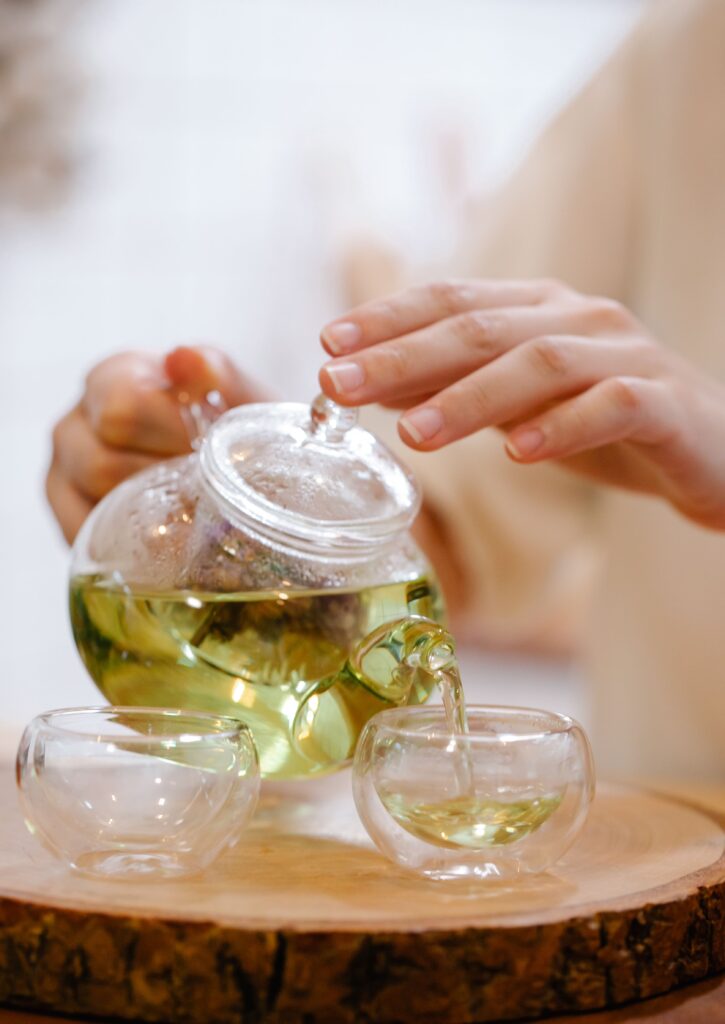
Drink green tea because you enjoy it. At present, nobody can tell you that it will clear your skin.
Are Green Tea Supplements Safe for Acne?
The dose used in the oral acne trial is difficult to justify for such a small result.
Participants took 856 mg of EGCG every day. The European Food Safety Authority found that green tea supplements providing 800 mg of EGCG per day or more may be associated with raised liver enzymes, an early sign of possible liver injury. Traditional green tea infusions did not show the same general concern.
EFSA could not identify who might react or set a supplemental dose that would be safe for everyone. The acne trial did not establish that its capsules caused liver injury. Even so, I would not recommend 856 mg of EGCG for an average improvement of about one inflamed lesion when liver-enzyme changes have been reported from 800 mg per day.
I would not take a high-EGCG supplement for acne. Better-studied topical and prescription options are available without exposing the whole body to a concentrated green tea dose.
Can a Skincare Formula Keep EGCG Active?
As a formulation scientist, I inspect this part most closely. Adding green tea extract to a serum is easy. Keeping its catechins active until the last application is much harder.
EGCG reacts with oxygen and can break down in a formula. Its stability depends on pH, temperature and light exposure. Trace metals and the liquid surrounding the EGCG can also affect how quickly it degrades. Research on green tea catechin formulations identifies this chemical instability as a major obstacle when developing topical EGCG products.
If you have watched a vitamin C serum turn brown, you have seen oxidation become visible. My article on why vitamin C serum turns brown explains why an antioxidant can remain on the ingredient list after its effective concentration has fallen. EGCG may degrade without giving you such an obvious warning.
Opaque or air-restrictive packaging can reduce exposure to light and oxygen, but packaging cannot rescue a poorly stabilised formula. The formulator may need to adjust the pH, control trace metals and choose compatible solvents. A protective delivery system may also help.
Finding Camellia sinensis leaf extract in the ingredient list only confirms that green tea material was added. The list cannot tell you how much EGCG the extract contained at the beginning, how much survives during storage or how much reaches the follicle.
Texture is another poor shortcut. A rich cream does not automatically block pores, just as a clear gel does not automatically suit acne-prone skin. Someone using adapalene or benzoyl peroxide may need a richer moisturiser because these treatments can cause dryness. If dryness makes it difficult to continue treatment, look at what a good moisturiser should contain rather than judging it by texture alone.
Pro tip: Look for a standardised extract or a stated EGCG concentration. Check whether the brand discusses finished-product stability rather than only describing green tea as an antioxidant. When the product page says nothing beyond “green tea extract”, you still do not know the dose applied to your skin.
How to Read Green Tea Skincare Claims
| What the label says | What you can take from it | What remains unanswered |
|---|---|---|
| “Contains green tea” | Green tea material appears somewhere in the formula | Catechin content, stability and acne performance |
| “Standardised green tea extract” | The starting extract met a defined composition target | How much active catechin survives throughout the shelf life |
| “Contains EGCG” | The formula includes the best-studied green tea catechin | Its concentration and delivery into the follicle |
| “Clinically tested” | The finished product may have been studied | The study design, comparison treatment and size of the improvement |
| “Helps clear acne” | The brand is making an acne-treatment claim | Whether research on that exact product can support the promise |
Can Green Tea Fade Acne Marks?
We do not have good research showing that green tea alone fades acne marks.
One clinical study reported improvements in redness and pigment measurements after participants used a hydrogel containing aloe, mangosteen and green tea. The researchers tested the complete hydrogel, so any of its botanical components or the product base could have contributed.
The study supports the tested combination, not every product that lists green tea. Another serum cannot claim the same effect simply because both ingredient lists contain the ingredient.
Green tea would not be my first choice for post-acne pigmentation. My guide to active ingredients for uneven skin tone explains which options can reduce pigment production and which act by changing skin-cell turnover.
Where Can Green Tea Fit in an Acne Routine?
For mild acne with mainly red, inflamed spots, a leave-on product containing a defined and stabilised green tea extract could support a routine based on a better-studied acne treatment. The green tea trials used leave-on preparations. A cleanser that stays on your face for less than a minute cannot automatically borrow their results.
If excess oil is the main reason you are considering green tea, compare it with the research on niacinamide in skincare. Niacinamide has also been studied for sebum control and may be easier to find in formulas designed to support the skin barrier.
Current acne guidelines recommend benzoyl peroxide and topical retinoids, with options such as azelaic acid or salicylic acid for suitable cases. Prescription treatment may be needed when acne is more severe. The American Academy of Dermatology acne guideline recommends combining treatments with different actions when appropriate.

Green tea may sound gentler, but painful nodules and new scars are not the place to rely on a botanical serum. Nodules form deeper in the skin, and scarring shows that inflammation has already damaged the surrounding tissue. Getting the acne under control now gives you the best chance of preventing marks and scars that will be much harder to improve later.
So, Does Green Tea Help Acne?
Topical green tea or EGCG may modestly reduce red, inflamed acne lesions. The studies are small, and the result from a research formula cannot be transferred to every serum containing green tea extract. If you want to try one, choose a leave-on product that identifies or standardises its extract and explains how the catechins are protected.
Drinking green tea has not been shown to treat acne. Concentrated oral extract produced little improvement, while the dose used in the best-known acne trial sits above the supplemental intake at which EFSA reported concern about liver enzymes. I would skip the supplement.
Green tea has not been shown to control blackheads, cysts or painful nodules. If your acne is leaving scars, do not expect a botanical serum to control the inflammation well enough. Green tea can remain an optional supporting ingredient, while an established acne treatment does the main work.
If you use a green tea acne product, tell me the exact one. I want to see whether the brand explains its extract and formulation or relies on the green leaf on the label.
Talk to you soon!
Dr Bozica