

If your skin looks dull, uneven or more lined than usual, you may have been told that free radicals are showing on your face. The usual solution is an antioxidant serum.
Your face cannot tell you that oxidative stress caused the change.
An antioxidant serum may be a reasonable addition to your routine, but tired-looking skin can have several causes that antioxidants will not correct. Any benefit also depends on whether the formula remains stable in the bottle and delivers an effective amount into the skin. The word “antioxidant” on the label cannot confirm either.
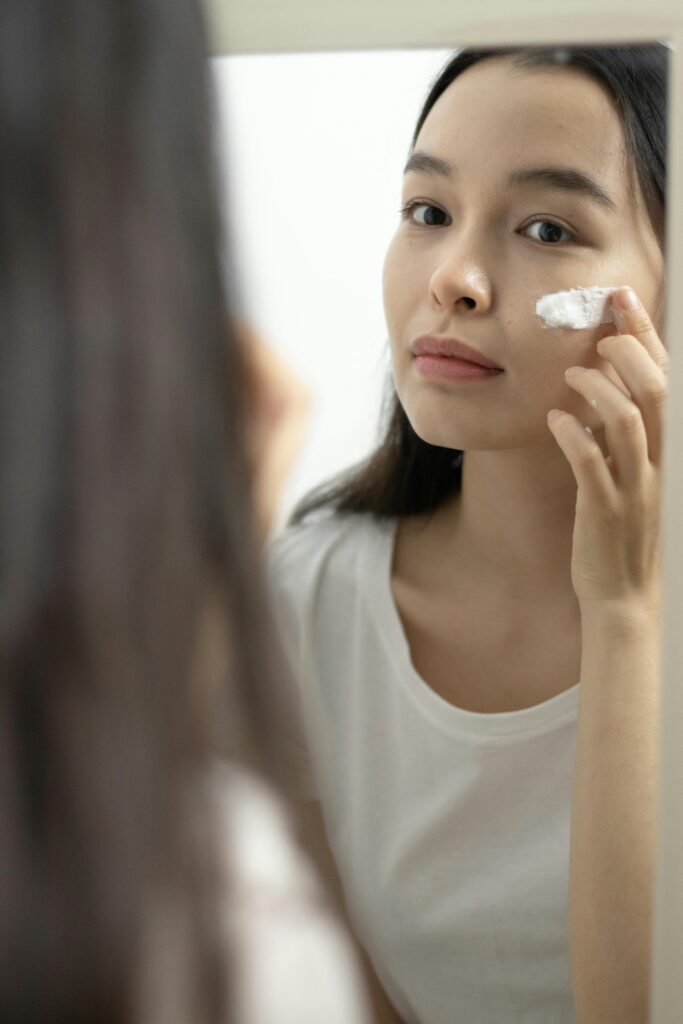
You cannot diagnose oxidative stress by looking at your face.
What Is Oxidative Stress in Skin?
Your skin naturally makes reactive oxygen species, or ROS. These are reactive molecules produced during normal cell activity. Immune cells also use them when responding to microbes and injured tissue (Chen et al., 2021; Rinnerthaler et al., 2015).
ROS are often called free radicals in skincare articles, although the terms do not mean exactly the same thing. Some ROS are free radicals and some are not. Hydrogen peroxide, for example, is an ROS but not a free radical.
Your skin can usually control these molecules with its own antioxidants. Problems begin when ROS are produced faster than the skin can control them. The excess ROS can change how cells communicate and can react with fats, proteins and DNA. This is oxidative stress (Chen et al., 2021; Rinnerthaler et al., 2015).
Removing every ROS molecule would interfere with normal cell signalling and immune defence. Your antioxidant systems control their production so they can do those jobs without causing excessive damage.
Your skin already contains antioxidant enzymes as well as vitamin C, vitamin E and glutathione. A topical antioxidant needs to support those existing defences. However, whether it succeeds depends on the formula (Chen et al., 2021; Papaccio et al., 2022).
Can You See Oxidative Stress on Your Face?
There is no single look that identifies oxidative stress.
Researchers can take skin samples and measure chemical signs of oxidation. You cannot get the same information from dullness, fine lines or uneven tone.
If dryness has made your skin look dull, a moisturiser may improve its appearance by smoothing the dry surface.
If a brown mark appeared after a spot, inflammation triggered extra pigment production. Oxidative reactions may have contributed to that process, but the mark does not become a separate condition called “oxidative stress pigmentation.”
The practical question is what changed in your skin. If you are trying to treat uneven tone, identify the type of pigmentation and choose an ingredient that has been studied for it. My guide to the best active ingredients for uneven skin tone explains how those options differ.
How Does Oxidative Stress Damage Skin?
UV exposure is one of the main reasons oxidative stress comes up in skincare. UV can damage cellular material directly. It can also increase ROS production inside skin cells. Smoking and air pollution can add to this exposure (Chen et al., 2021).
Oxidative stress and collagen
After UV exposure, ROS can activate signals that increase the production of matrix metalloproteinases, usually called MMPs. These enzymes break down collagen. UV exposure can also reduce the amount of new collagen the skin makes.
If this happens repeatedly, the skin may lose collagen faster than it replaces it. That contributes to lines and other signs of photoageing over time. ROS do not simply dissolve collagen on contact. They change the cell signals that control collagen breakdown and production (Rinnerthaler et al., 2015; Papaccio et al., 2022).
Oxidative stress and the skin barrier
ROS can react with the fats in cell membranes and barrier lipids. The first reaction can create more reactive compounds, which continue the process. This is called lipid peroxidation.
When oxidative damage affects enough lipids, cell membranes and the skin barrier may function less effectively. However, dryness alone is not evidence of oxidative stress because weather, cleansing practices and irritating skincare can produce the same symptom.
Oxidative stress and pigmentation
Oxidative reactions can affect inflammation and the signals involved in pigment production. They can contribute to melasma and to dark marks left after inflammation, but they are only part of the biology.
One antioxidant serum cannot be assumed to treat every type of pigmentation. The cause of the pigmentation still determines which treatment is most likely to help.
Do Antioxidant Serums Work?
Antioxidants are studied because they can neutralise ROS before these reactive molecules damage essential cell structures. Whether an antioxidant serum can produce this effect in human skin depends on its stability, concentration, skin penetration and biological availability (Chen et al., 2021).
The ingredient has several chances to fail before it reaches a skin cell.
It may break down while the product is stored. More can be lost each time the bottle is opened and exposed to air or light. Once applied, the ingredient has to leave the serum base and cross the outer skin barrier. Enough of it must reach the relevant part of the skin while it is still active.
A test-tube study avoids most of these problems because the antioxidant and the reactive molecule can be placed together directly. A face serum has to solve them through formulation.
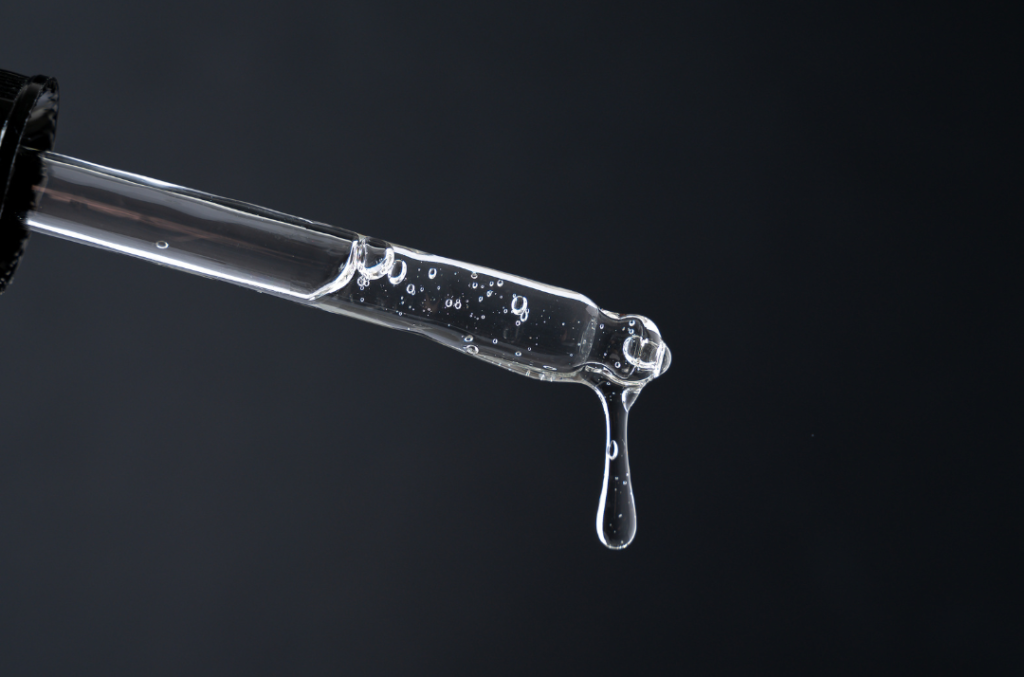
An antioxidant has to survive the bottle before it can do anything for your skin.
What an Antioxidant Label Does Not Tell You
An ingredient list tells you what was added when the product was made. It does not show how much remains by the time you use it or how much enters your skin.
| What you see on the label | What you know | What you still do not know |
| “Antioxidant complex” | The formula contains ingredients described as antioxidants | How much of each ingredient was added, whether it remains active or whether the combination was tested |
| A vitamin C percentage | The brand has declared an amount for a vitamin C ingredient | Whether that number refers to pure vitamin C or to a raw-material blend, and how much remains after opening |
| Vitamin C, vitamin E and ferulic acid | The formula contains a combination used in published research | Whether the forms, amounts, pH and serum base match the researched formula |
| “Encapsulated” or “liposomal” | The brand says it uses a delivery system | How much ingredient was encapsulated, whether it is released and whether skin delivery was measured |
| “Clinically tested” | The product or one of its ingredients may have been tested in people | What was tested, what it was compared with and whether the change would be noticeable |
| A long antioxidant list | The formula contains many ingredients associated with antioxidant activity | Whether adding more ingredients improved the finished product |
As a formulation scientist, I care about what happened to an ingredient after it was added. The number of antioxidants a brand can fit on the label tells me much less. One antioxidant delivered at an effective amount makes more sense than several present at amounts too low to do anything.
What Does the Research Show About Vitamin C, Vitamin E and Ferulic Acid?
Vitamin C is a good example of why you cannot separate an ingredient from its formula.
L-ascorbic acid is the form of vitamin C with the strongest direct research in human skin. It can react with ROS, and skin cells also use it when making collagen. Small controlled studies have found improvements in photoaged skin after several months of topical use. Those findings apply to the formulas that were tested, not to every serum that contains vitamin C (Humbert et al., 2003; Fitzpatrick and Rostan, 2002).
L-ascorbic acid also breaks down easily in water. Air, light and heat can speed up that process. A formula may begin with the stated amount of vitamin C but contain less after months of storage or repeated opening.
Getting vitamin C through the outer skin barrier creates another problem. In a widely cited pig-skin experiment, L-ascorbic acid entered the tissue only when the formula had a low pH. This helps explain why many L-ascorbic acid serums are acidic. It also explains why they can sting, especially when the skin barrier is already irritated (Pinnell et al., 2001).
Vitamin E fits into lipid-rich parts of the skin, while vitamin C works in water-rich areas. Vitamin C can also help return oxidised vitamin E to an active form. Ferulic acid was added to a specific vitamin C and vitamin E solution to improve its stability.
You may have read that ferulic acid makes vitamin C eight times more effective. That is not what the study showed. The researchers tested one solution containing L-ascorbic acid, vitamin E and ferulic acid during controlled UV exposure. Adding ferulic acid increased the protection produced by that formula. The experiment did not show that ferulic acid multiplies the effect of every vitamin C serum (Lin et al., 2005).
A later human study found that a similar combination reduced several skin responses after experimental UV exposure. The study supports that particular type of formula as an addition to sun protection. It did not show that the serum could replace sunscreen or that every product with the same three ingredients will perform in the same way (Murray et al., 2008).
Two serums with similar ingredient lists are not automatically equivalent. They may use different amounts, solvents or pH levels. One may keep vitamin C stable for longer, while the other may lose a large part of it before the bottle is finished.
For more on how these two vitamins behave, read vitamin C versus vitamin E for skin. My guide to vitamin C for skin explains the differences between L-ascorbic acid and vitamin C derivatives.
What Might Your Skin Experience After an Antioxidant Serum?
You cannot feel an antioxidant neutralising ROS. You can feel when the formula irritates your skin or does not sit well under the rest of your routine.
| What you notice | Why it may happen | What to do |
| The serum stings when you apply it | Some L-ascorbic acid formulas have a low pH. Stinging is more likely if your skin is already irritated | Wash it off if the sting is strong or continues. Let your skin recover before trying a gentler formula |
| Your skin becomes dry, itchy or red | The formula may be irritating your barrier. Another acid or retinoid in your routine may be adding to the irritation | Stop the new product and keep the rest of the routine simple until your skin settles |
| A clear serum turns orange or brown | L-ascorbic acid may be breaking down, so less active vitamin C remains | Replace it if the colour change is pronounced, especially if the smell or texture has also changed |
| The serum rolls into small flakes under sunscreen | The two formulas may form a film that lifts when you rub them together | Try less serum and allow it to dry. If it still pills, remove the serum from your morning routine and keep the sunscreen |
| You see no quick improvement | Antioxidant protection may not produce an immediate visible change. An ineffective serum may also look and feel perfectly normal | Do not buy a stronger percentage just to feel something. Check whether the product was studied for the result you want |
Stinging does not prove that vitamin C is working. If your skin already reacts easily, my guide to vitamin C serum for sensitive skin explains how acidity and an irritated barrier affect what you feel.
If your serum has changed colour, read why vitamin C serum turns brown. Colour cannot tell you the exact amount of vitamin C left, but a clear change towards orange or brown tells you the formula is no longer the same.
Pro tip: When you open a new L-ascorbic acid serum, put one drop on white tissue and photograph it in daylight. If you are unsure about the colour later, repeat the photo in similar light. This gives you a much better comparison than trying to remember how the serum looked when it was new.
How Do I Choose an Antioxidant Serum?
Decide what you want the serum to improve. Vitamin C may be worth considering if you want to target uneven tone or signs of photoageing. A general promise to “defend” or “detoxify” skin gives you no clear result to look for.
Check the form of the antioxidant. L-ascorbic acid has direct human research, but it is difficult to keep stable and its acidic formulas may irritate some skin. Vitamin C derivatives may be easier to formulate at a gentler pH. They still have to enter the skin and convert into a form the skin can use. I would want research on the finished product rather than the derivative alone (Al-Niaimi and Chiang, 2017).
Look at what the brand actually tested. A study on L-ascorbic acid does not test every L-ascorbic acid serum. The brand should tell you whether people used the finished product, what they compared it with and what changed.
Packaging can reduce exposure to air and light. An opaque container or an air-restrictive pump makes sense for an ingredient that breaks down easily. Good packaging helps protect a formula, but it cannot rescue a poorly made one.
Add one new active product at a time. If you add three new products at once, if you get irritated it is hard to know which new product caused it. You may end up stopping all three without learning which one your skin could not tolerate.
Do You Need an Antioxidant Serum?
No. You can have a well-designed skincare routine without one.
If you want to reduce UV-related skin damage, reduce the UV that reaches your skin. Cancer Council Australia recommends protective clothing, broad-spectrum SPF 50 or SPF 50+ sunscreen, a protective hat, shade and sunglasses when sun protection is needed.
An antioxidant serum may add some protection when the formula has been shown to work. It cannot make up for too little sunscreen, missed areas or spending longer in the sun.
The serum also becomes a poor addition if it makes your sunscreen roll off or encourages you to apply less. Keep the sunscreen and remove the serum from your morning routine.
You do not need an antioxidant cleanser, serum, moisturiser and face oil in the same routine. A cleanser remains on your skin briefly before you rinse it away, so it cannot borrow results from a leave-on serum. Adding more antioxidant products also increases the number of formulas your skin has to tolerate without proving that your protection has improved.
What I Would Check Before Buying
I would look for the exact antioxidant form and a concentration that refers to that ingredient rather than to a blend supplied to the brand. I would also check whether the packaging limits air and light exposure.
The most informative research tests the finished serum in people. I want to know what changed after they used it and what the serum was compared with. A page full of studies about separate ingredients does not answer that question.
I would be cautious if one serum promises to improve wrinkles, acne, pigmentation and sensitivity. These concerns do not develop in the same way, so each one needs to be measured separately.
I would not let the phrase “oxidative stress” turn normal changes in my skin into evidence of hidden damage. The research gives us good reasons to protect skin from repeated UV exposure. It also gives us reasons to take antioxidant formulation seriously.
It does not tell us that every dull morning needs a serum.
Talk to you soon!
Dr Bozica
Sources
- Chen J, Liu Y, Zhao Z, Qiu J. Oxidative stress in the skin: Impact and related protection. International Journal of Cosmetic Science. 2021.
- Rinnerthaler M, Bischof J, Streubel MK, Trost A, Richter K. Oxidative Stress in Aging Human Skin. Biomolecules. 2015.
- Papaccio F, D’Arino A, Caputo S, Bellei B. Focus on the Contribution of Oxidative Stress in Skin Aging. Antioxidants. 2022.
- Lin FH, Lin JY, Gupta RD, et al. Ferulic acid stabilizes a solution of vitamins C and E and doubles its photoprotection of skin. Journal of Investigative Dermatology. 2005.
- Murray JC, Burch JA, Streilein RD, Iannacchione MA, Hall RP, Pinnell SR. A topical antioxidant solution containing vitamins C and E stabilized by ferulic acid provides protection for human skin against damage caused by ultraviolet irradiation. Journal of the American Academy of Dermatology. 2008.
- Humbert PG, Haftek M, Creidi P, et al. Topical ascorbic acid on photoaged skin. Experimental Dermatology. 2003.
- Fitzpatrick RE, Rostan EF. Double-blind, half-face study comparing topical vitamin C and vehicle for rejuvenation of photodamage. Dermatologic Surgery. 2002.
- Pinnell SR, Yang H, Omar M, et al. Topical L-ascorbic acid: percutaneous absorption studies. Dermatologic Surgery. 2001.
- Al-Niaimi F, Chiang NYZ. Topical Vitamin C and the Skin: Mechanisms of Action and Clinical Applications. Journal of Clinical and Aesthetic Dermatology. 2017.
- Cancer Council Australia. Be SunSmart.