

Because skin contains hyaluronic acid (HA), supplement labels imply that swallowing HA replaces some we lose with age.
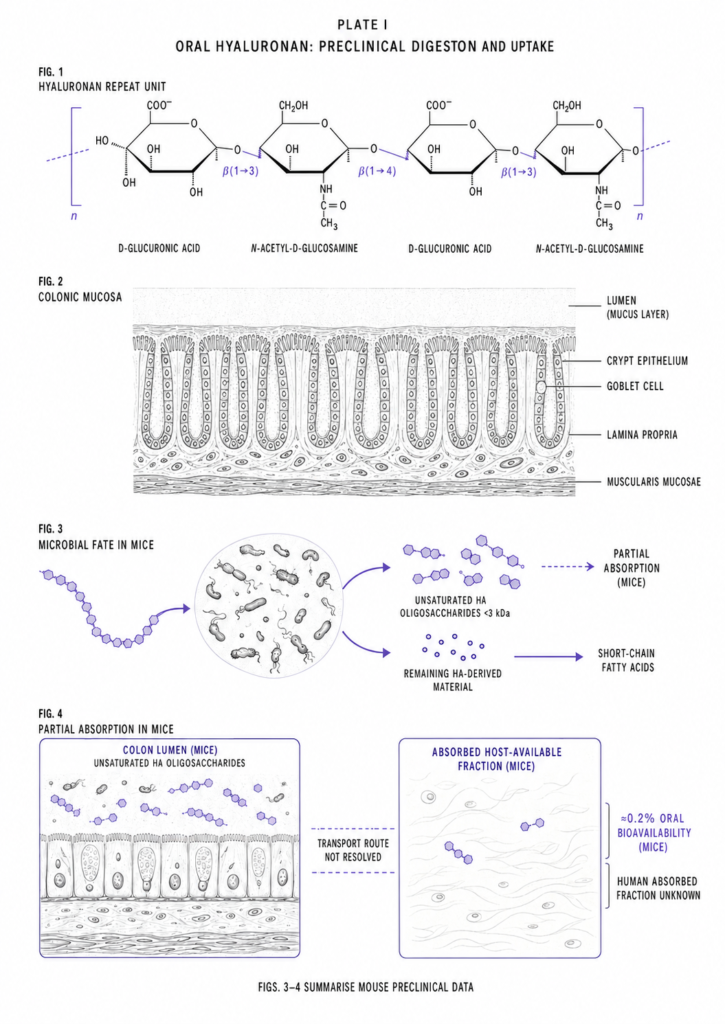
The problem is, HA capsule enters your digestive tract, not your skin. Hyaluronic acid is a large chain of repeating sugars. Gut bacteria cut the chain into much smaller fragments. Animal tracking research suggests that only a small amount crosses the intestinal wall, while the absorbed amount in humans remains unknown. Researchers have not shown intact HA travelling from a capsule into facial skin.
Several human trials have still measured higher skin hydration after people took oral HA for eight to twelve weeks. Some studies also measured changes in fine wrinkles or elasticity.
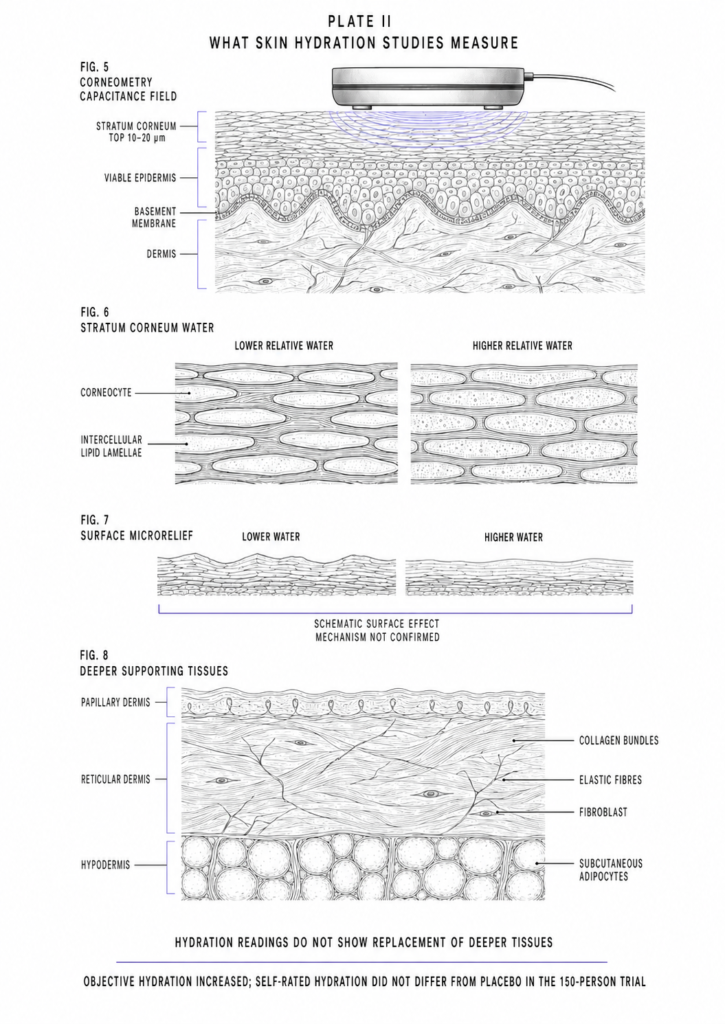
If you respond, your skin may feel slightly less tight or fine dehydration lines may look a little softer. You may feel no change. In the largest recent trial, instruments detected better hydration. People in every group reported feeling more hydrated, and the HA groups did not separate from placebo on that self-rating.
- Do Hyaluronic Acid Supplements Really Work?
- What Does Hyaluronic Acid Do in Skin?
- What Happens When You Swallow Hyaluronic Acid?
- Does Low-Molecular-Weight HA Have Better Absorption?
- What Did Human Studies of Oral HA Find?
- What Oral Hyaluronic Acid Benefits Might You Notice?
- How Long Do Hyaluronic Acid Supplements Take to Work?
- What Is the Best Hyaluronic Acid Dose for Skin?
- How Do You Choose the Best Hyaluronic Acid Supplement?
- Are HA Supplements Better Than Topical HA?
- Hyaluronic Acid vs Collagen: Which Supplement Is Better for Skin?
- Can Skincare Increase Your Skin's Own Hyaluronic Acid?
- Are Hyaluronic Acid Supplements Safe?
- Are HA Supplements Among the Best Supplements for Skin Hydration?
- So, Do Hyaluronic Acid Supplements Work for Skin?
- Hyaluronic Acid Supplements: Frequently Asked Questions
- Can Oral Hyaluronic Acid Hydrate Skin?
- Does Oral Hyaluronic Acid Reduce Wrinkles?
- How Much Hyaluronic Acid Should You Take for Skin?
- Is Low-Molecular-Weight Oral HA Absorbed Better?
- Are Oral HA Supplements Better Than Topical HA?
- Is Hyaluronic Acid Better Than Collagen for Skin?
- Can Vegetarians Take Hyaluronic Acid Supplements?
- Does an AUST L Number Mean the Supplement Works?
- References
Do Hyaluronic Acid Supplements Really Work?
Oral hyaluronic acid can modestly improve measured skin hydration after about eight to twelve weeks. Some trials also found changes in crow’s-feet wrinkles or elasticity. The effect may be too small for you to see or feel, and oral HA has not been shown to restore facial volume or replace a moisturiser.
When the outer skin holds more water, its cells swell slightly. The surface becomes more flexible, and shallow lines caused by dehydration may look softer. A hydration or wrinkle reading can then improve even though the collagen, elastic fibres and fat beneath the surface have not changed.
| What researchers measured | What you may notice | Why the two may differ |
| More water in the outer skin | Less tightness or slightly softer dehydration lines | A probe can detect a small increase that you may not feel |
| Shallower crow’s-feet measurements | Fine lines may look a little smoother | Hydrated surface cells swell, but deeper wrinkle structure remains |
| Better elasticity readings | Skin may feel a little more supple, or no different | Water affects how skin bends, while collagen and elastic fibres also control its mechanical behaviour |
| Changes after several weeks | Any improvement should appear gradually | Digestion and absorption separate the capsule from the skin |
Injectable filler produces a different result because a clinician places cross-linked HA directly into tissue. The gel occupies space and attracts water at the injection site. A supplement moves through the stomach and intestine, where gut bacteria break HA into smaller fragments. Any HA-derived material that enters the circulation has already passed through this process and is chemically different from filler gel.
What Does Hyaluronic Acid Do in Skin?
Hyaluronic acid fills some of the space around skin cells. It binds water and helps keep those surroundings hydrated while the cells function.
HA does not exfoliate. Glycolic acid loosens the connections between surface cells partly because it is formulated at a low pH. Hyaluronic acid belongs to a different chemical family and is used mainly for its water-binding properties and its interactions with cell receptors.
Molecular size changes how HA behaves. Large HA chains hold water and help organise the space around cells. Smaller fragments can interact differently with receptors and may produce different biological signals. Skin controls where HA is made, how large the chains become and how quickly enzymes break them down.
Eating HA cannot directly replace the HA in skin because digestion changes the molecule before absorption. Skin ageing also alters collagen, elastic fibres and the barrier that slows water loss. Improving one hydration measurement cannot reverse all of those changes.
What Happens When You Swallow Hyaluronic Acid?
The original HA molecule is too large to cross the intestinal wall easily. Gut bacteria cut it into smaller fragments that may be absorbed more easily. Those fragments are chemically different from the large molecule advertised on the label.
In a 2023 experiment, researchers gave mice labelled HA so they could follow it through the body. Gut bacteria broke the HA into fragments, and some of the material crossed the intestine. Bacteria converted another portion into short-chain fatty acids. The researchers estimated very low oral bioavailability.
The low bioavailability reported in mice cannot be used as a human absorption figure. We do not know what percentage enters the circulation after a woman takes an HA supplement.
Researchers have proposed that the fragments or bacterial products influence cell signals elsewhere in the body. They may also affect the body’s own production and breakdown of HA. Most support for these routes comes from animal and laboratory experiments. The human trials measured skin before and after supplementation without tracing the absorbed material to the face.
Does Low-Molecular-Weight HA Have Better Absorption?
I would not choose a supplement because “low molecular weight” is printed on the front.
The starting size may change how quickly gut bacteria break HA down. Positive human skin studies have used very different molecular weights, including sodium hyaluronate as large as 1,800 kDa. No human trial has established one starting size as the best for skin hydration.
One small study found a moisture benefit with 300 kDa HA but not with 800 kDa HA. Another trial comparing 2 kDa and 300 kDa HA reported some improvement with both forms. Small groups and different measurements make it impossible to turn either result into a shopping rule.
If a company says its molecular weight improves absorption, look for a human trial on that exact ingredient at the same daily amount. A study of another supplier’s HA only shows what happened with the material used in that study.
What Did Human Studies of Oral HA Find?
A 2025 meta-analysis combined seven randomised controlled trials. On average, the HA groups had better hydration, elasticity and wrinkle-depth measurements than the placebo groups. The analysis found no clear improvement in firmness, wrinkle volume or water loss through the skin.
Combining the trials increases the number of participants, but the products and testing methods still differed. Several studies were funded, designed or written by companies that manufactured the tested HA. Independent repetition remains limited, particularly for claims about one molecular weight or one dose performing better.
| Study | What participants took | What changed | Important limit |
| Dolečková et al., 2026 | 150 adults took 60 mg, 120 mg or placebo daily for 12 weeks | Both HA groups had better facial-hydration readings than placebo. Several barrier, wrinkle and elasticity measurements also changed | People in all groups reported feeling more hydrated, with no difference between the HA and placebo groups. The HA manufacturer funded the trial, and most authors worked for the company |
| Gao et al., 2023 | 129 women took 100 mg, 200 mg or placebo daily for 12 weeks | Hydration increased, with a larger change reported at 200 mg. Several imaging measurements also changed | Some analyses emphasised change from each group’s starting point. Groups can improve over time without treatment, so the comparison with placebo is needed |
| Hsu et al., 2021 | 40 adults took 120 mg or placebo daily for 12 weeks | The HA group had better hydration, elasticity, water-loss and surface measurements | Forty participants cannot show how often the same result will occur with another product |
| Oe et al., 2017 | 60 adults took 120 mg of 2 kDa HA, 300 kDa HA or placebo daily for 12 weeks | Some crow’s-feet measurements improved, particularly with 300 kDa HA | Each group was small, and the manufacturer funded and conducted the study |
| Kawada et al., 2015 | 61 women with dry skin took 120 mg of 300 kDa HA, 800 kDa HA or placebo daily for six weeks | Skin moisture improved with 300 kDa HA, while the 800 kDa group did not show the same result | One small trial cannot establish 300 kDa as the best form |
What Oral Hyaluronic Acid Benefits Might You Notice?
If oral HA helps your skin, I would expect a small change at the surface.
Skin with more water in its outer layers usually feels more flexible. Fine lines may look softer because hydrated cells swell and partly fill shallow grooves. A moisturiser can soften dry lines through the same swelling, but it delivers hydrating ingredients directly to the outer skin.
A hydration probe can detect differences that are too small to change how your skin feels. If the average reading rises enough, the study reports better hydration even when participants notice nothing.
“A hydration probe can register a change that your face never notices.”
If you test a supplement, choose one or two changes that you can judge without a machine. You might record whether your skin still feels tight by midday and whether fine lines around the eyes look different before skincare.
Take a photograph before you start and repeat it every four weeks in the same light, from the same distance and before applying products. Hydration changes with weather, cleansing and moisturiser use, so changing those conditions can easily hide or imitate a supplement effect.
How Long Do Hyaluronic Acid Supplements Take to Work?
Most studies ran for eight to twelve weeks. A few days is too short to compare your experience with that research.
Twelve weeks is a reasonable test period because it matches several trials. Keep your cleanser, moisturiser and exfoliation routine stable. If you begin a richer moisturiser during the same week, you will not know which change reduced tightness.
Check once every few weeks. Sleep, humidity and recent skincare can alter how hydrated skin looks from one morning to the next. A longer interval makes it easier to see whether any improvement persists.
If your skin looks and feels unchanged after twelve weeks, the supplement has not produced a benefit that is meaningful to you. A statistically significant group average cannot create a personal result that you cannot detect.
What Is the Best Hyaluronic Acid Dose for Skin?
Researchers have tested daily amounts from 60 mg to 200 mg. The amount used most often is 120 mg per day.
In the recent 150-person trial, both 60 mg and 120 mg improved facial-hydration readings. The 120 mg group changed across more of the other measurements. Another trial reported a larger hydration increase with 200 mg than with 100 mg, but higher intake did not consistently improve every outcome.
I would treat 120 mg as the easiest amount to compare with published studies, not as a medically established dose. The research has not shown that doubling the amount doubles the skin benefit.
How Do You Choose the Best Hyaluronic Acid Supplement?
Start with the daily amount. If the label only gives the weight of a “beauty complex”, you cannot work out how much HA you are taking.
| Check | Why it affects your decision |
| Exact daily amount of HA or sodium hyaluronate | It allows comparison with the 60 to 200 mg amounts tested in human studies |
| A short ingredient list | Collagen, ceramides, vitamins and plant extracts can also affect the result, so a blend cannot show whether HA helped |
| HA source | Fermentation-derived HA can suit vegetarians and vegans, while some HA comes from poultry tissue |
| Research on the same branded ingredient | Starting molecular weight and manufacturing differ between suppliers |
| Independent batch testing | Testing can confirm ingredient identity and check for contaminants |
| Australian ARTG number | AUST L shows that the product is listed, but the TGA did not assess its efficacy before sale. AUST L(A) means the supporting evidence received pre-market assessment |
Sodium hyaluronate is the sodium salt of hyaluronic acid. It dissolves readily and is commonly used in supplements. The different name does not make it a weaker form.
Practical tip: Choose a single-ingredient product if you want to learn whether HA changes your skin. With a blend, any improvement cannot be assigned to HA.
Are HA Supplements Better Than Topical HA?
Topical HA starts on the outer skin, where dryness is felt. It can hold water within the product and the upper layers of the skin, so the surface may feel smoother after the first few applications.
Topical HA alone may not be enough for dry skin. Humectants help increase water in the outer layer, while emollients soften rough areas and occlusive ingredients slow evaporation. A complete moisturiser can perform all of these jobs in one formula.
Oral HA starts in the digestive tract, where gut bacteria alter it before a small fraction is absorbed. Skin changes took several weeks in the trials, and individual responses may differ because digestion and absorption vary.
| Topical hyaluronic acid | Oral hyaluronic acid | |
| Where it starts | On the outer skin | In the digestive tract |
| When a change may appear | Surface feel can change after the first few uses | Trial differences usually appeared after several weeks |
| When I would consider it | Skin feels tight and needs better topical hydration | A good topical routine already controls dryness, but you want to test an additional effect |
| Main limit | HA needs the rest of the formula to help slow water loss and soften dry skin | The measured change may be too small to see or feel |
If your skin feels tight now, I would start with topical care. My guide to hyaluronic acid in skincare explains what HA can do when you apply it directly.
For dry skin, compare squalane versus hyaluronic acid before deciding that one ingredient should handle the whole problem. My guide to what makes a good moisturiser explains how humectants, emollients and occlusive ingredients work together.
If you are choosing between hydration and help with uneven tone or UV-related oxidative stress, vitamin C versus hyaluronic acid answers that separate question.
Hyaluronic Acid vs Collagen: Which Supplement Is Better for Skin?
No head-to-head trial has shown that HA or collagen produces a larger skin benefit.
The two supplements also change during digestion. Gut bacteria break HA into smaller sugar fragments and metabolites. Digestive enzymes break collagen into peptides and amino acids. Neither supplement arrives intact in a wrinkle.
| Hyaluronic acid supplement | Hydrolysed collagen supplement | |
| Outcomes studied most | Hydration, with some elasticity and wrinkle measurements | Hydration and elasticity, with some wrinkle measurements |
| Amount used in trials | Usually 60 to 200 mg daily | Usually several grams daily |
| Source | Fermentation can provide an animal-free option | Commercial collagen comes from animal tissue |
| Research concern | Fewer trials, and manufacturer involvement is frequent | More trials, but products differ and commercial funding is common |
A 2025 collagen meta-analysis initially found better hydration, elasticity and wrinkle measurements. Those improvements disappeared when the authors restricted the analysis to higher-quality trials or studies without pharmaceutical-company funding.
The HA research also relies heavily on company-funded studies. Declaring a winner would require a direct comparison using defined products and the same measurements.
For vegetarians and vegans, fermentation-derived HA avoids the animal tissue used to make commercial collagen. The source may decide which supplement you are willing to take, but it cannot show which one produces a larger skin change.
Can Skincare Increase Your Skin’s Own Hyaluronic Acid?
One of the studies supplied for this article tested glycolic acid, not an HA supplement.
Participants applied a 20% glycolic acid lotion or a comparison lotion to forearm skin twice daily for three months. Biopsies from the glycolic-acid-treated areas contained more HA, and the researchers also measured an increase in type I collagen messenger RNA.
Researchers used a high concentration twice daily and tested forearm skin. A 5% facial toner changes the concentration, frequency and body site, so it cannot be expected to reproduce the biopsy result.
Please do not copy the 20% twice-daily schedule. Frequent high-strength acid can irritate skin, which increases stinging, redness and water loss. My guide to how to use glycolic acid safely explains how to increase use only when the skin remains comfortable.
Are Hyaluronic Acid Supplements Safe?
The skin trials lasted about six to twelve weeks and did not identify a clear treatment-related safety problem. Follow-up ended too soon to show what happens after years of daily use.
The trials also cannot answer every question about pregnancy, breastfeeding, health conditions or the additional ingredients used in beauty blends.
Check whether the HA comes from fermentation or poultry if you avoid animal ingredients or have a relevant allergy. Read the amounts of added vitamins and botanicals, particularly if you already take another supplement containing them.
If you use prescription medicines or manage a health condition, ask a pharmacist or doctor to assess the finished supplement. The safety of HA alone cannot account for every ingredient in the product.
Are HA Supplements Among the Best Supplements for Skin Hydration?
Oral HA has placebo-controlled human research showing a possible hydration benefit.
A capsule still cannot remove the causes of dryness at the skin surface. A harsh cleanser removes lipids that help slow water loss. Frequent exfoliation can leave the barrier irritated. A light gel may add water without leaving enough emollient or occlusive material to reduce evaporation.
Correcting those problems usually changes how skin feels sooner because the cleanser and moisturiser act directly where water is escaping. Oral HA becomes easier to judge once your routine is stable and everyday tightness is already controlled.
I would spend money on a suitable moisturiser before adding an oral HA supplement. If the routine is already working and you remain curious, a twelve-week supplement test can answer whether the extra hydration is noticeable on your skin.
So, Do Hyaluronic Acid Supplements Work for Skin?
Placebo-controlled trials have repeatedly found higher skin-hydration readings with oral HA. The studies did not show replacement of the HA, collagen or facial volume that changes with age.
Some people may notice less tightness or softer dehydration lines after eight to twelve weeks. Others will see and feel nothing.
If I were testing HA, I would use a simple product with an amount close to the research, keep my skincare unchanged and compare photographs over twelve weeks. I would stop buying it if my skin looked and felt the same.
When I read these studies, I see a possible extra for someone whose topical routine already works. I do not see a reason to chase every new line with another capsule. Skin ageing changes several structures at once, while oral HA appears to influence one small part of hydration.
The average result from a trial cannot decide whether the supplement deserves your money. If your skin stays the same, you already have your answer.
Tell me if you have tried oral HA and what you noticed after eight to twelve weeks. I am especially interested in whether your skin felt different.
Talk to you soon!
Dr Bozica
Hyaluronic Acid Supplements: Frequently Asked Questions
Can Oral Hyaluronic Acid Hydrate Skin?
Several placebo-controlled trials measured higher skin hydration after people took oral HA daily. The change usually appeared over eight to twelve weeks. You may feel less tightness or see slightly softer dehydration lines, but the improvement may be too small to notice.
Does Oral Hyaluronic Acid Reduce Wrinkles?
Some trials measured shallower crow’s-feet wrinkles. Extra water in the outer skin can swell surface cells and soften fine dehydration lines. Oral HA has not been shown to restore lost facial volume or remove deep wrinkles.
How Much Hyaluronic Acid Should You Take for Skin?
Around 120 mg daily appears repeatedly in skin trials. This amount provides the closest comparison with several studies, although researchers have not established it as a treatment dose.
Is Low-Molecular-Weight Oral HA Absorbed Better?
Gut bacteria break oral HA into smaller fragments before much can be absorbed. Human skin trials have not identified one best starting molecular weight. The size printed on the label describes the ingredient before digestion.
Are Oral HA Supplements Better Than Topical HA?
Topical HA reaches the outer skin directly and can change surface feel much sooner. Oral HA takes several weeks and may produce a change too small to notice. Skin that feels dry now needs a suitable topical routine first.
Is Hyaluronic Acid Better Than Collagen for Skin?
No direct comparison has answered this. Both research areas include commercially funded trials. Fermentation-derived HA offers an animal-free option, while commercial collagen comes from animal tissue.
Can Vegetarians Take Hyaluronic Acid Supplements?
Fermentation-derived HA can suit vegetarians or vegans. Some HA comes from poultry tissue, so check the label or ask the manufacturer to confirm the source.
Does an AUST L Number Mean the Supplement Works?
No. AUST L means the product is listed in the Australian Register of Therapeutic Goods, but the TGA did not assess its efficacy before sale. An AUST L(A) product has undergone pre-market assessment of the evidence supporting its claims.
References
- Dolečková I, et al. Oral sodium hyaluronate improves skin hydration, barrier function and signs of aging: a randomized, double-blind, placebo-controlled trial in 150 healthy adults. Scientific Reports. 2026;16:2941.
- Amin P, et al. Oral Hyaluronic Acid Supplement: Efficacy in Skin Hydration, Elasticity, and Wrinkle Depth Reduction. Journal of Drugs in Dermatology. 2025;24(9):910-919.
- Gao YR, et al. Oral administration of hyaluronic acid to improve skin conditions via a randomized double-blind clinical test. Skin Research and Technology. 2023;29(11).
- Hsu TF, et al. Oral Hyaluronan Relieves Wrinkles and Improves Dry Skin: A 12-Week Double-Blinded, Placebo-Controlled Study. Nutrients. 2021;13(7):2220.
- Oe M, et al. Oral hyaluronan relieves wrinkles: a double-blinded, placebo-controlled study over a 12-week period. Clinical, Cosmetic and Investigational Dermatology. 2017;10:267-273.
- Kawada C, et al. Ingestion of hyaluronans improves dry skin conditions: a randomized, double-blind, controlled study. Journal of Clinical Biochemistry and Nutrition. 2015;56(1):66-73.
- Šimek M, et al. Molecular weight and gut microbiota determine the bioavailability of orally administered hyaluronic acid. Carbohydrate Polymers. 2023;313:120880.
- Papakonstantinou E, Roth M, Karakiulakis G. Hyaluronic acid: A key molecule in skin aging. Dermato-Endocrinology. 2012;4(3):253-258.
- Stern R, Maibach HI. Hyaluronan in skin: aspects of aging and its pharmacologic modulation. Clinics in Dermatology. 2008;26(2):106-122.
- Bernstein EF, et al. Glycolic acid treatment increases type I collagen mRNA and hyaluronic acid content of human skin. Dermatologic Surgery. 2001;27(5):429-433.
- Price RD, Berry MG, Navsaria HA. Hyaluronic acid: the scientific and clinical evidence. Journal of Plastic, Reconstructive and Aesthetic Surgery. 2007;60(10):1110-1119.
- Myung SK, Park Y. Effects of Collagen Supplements on Skin Aging: A Systematic Review and Meta-Analysis of Randomized Controlled Trials. The American Journal of Medicine. 2025;138(9):1264-1277.
- Therapeutic Goods Administration. How we regulate medicines. Australian Government.