

Glycolic acid can loosen scalp scale and reduce some shaving bumps. Active eczema is different because the roughness comes from inflammation and barrier damage, rather than surface build-up alone.
Scalp psoriasis, atopic eczema and ingrown hairs can all leave skin rough or flaky, which makes exfoliation seem like a logical response. But they do not become rough for the same reason.
In psoriasis, immune inflammation speeds epidermal renewal and produces thick scale. Atopic eczema takes another route: inflammation develops in skin that already loses water and admits irritants too easily. An ingrown hair begins with the hair itself, which curves into nearby skin and sets off a local reaction.
Glycolic acid has reduced beard-area razor bumps in small human studies. On scalp psoriasis, it may loosen scale, although the only clinical study used glycolic and lactic acid together. I would keep it away from active eczema, where the barrier is already inflamed and easier to irritate.
Can glycolic acid help? A quick comparison
| Skin concern | What glycolic acid may do | What the research cannot tell us |
|---|---|---|
| Scalp psoriasis | Loosen adherent scale and make other scalp treatments easier to apply | The only clinical study used glycolic acid with lactic acid, so we do not know how glycolic acid would perform alone |
| Atopic eczema | No treatment benefit has been established | Research has not shown that glycolic acid repairs the atopic barrier, controls inflammation or prevents flares |
| Ingrown hairs and razor bumps | Reduce inflamed beard-area shaving bumps | The studies were small, involved adult men and did not examine waxing or hair removal on other body areas |
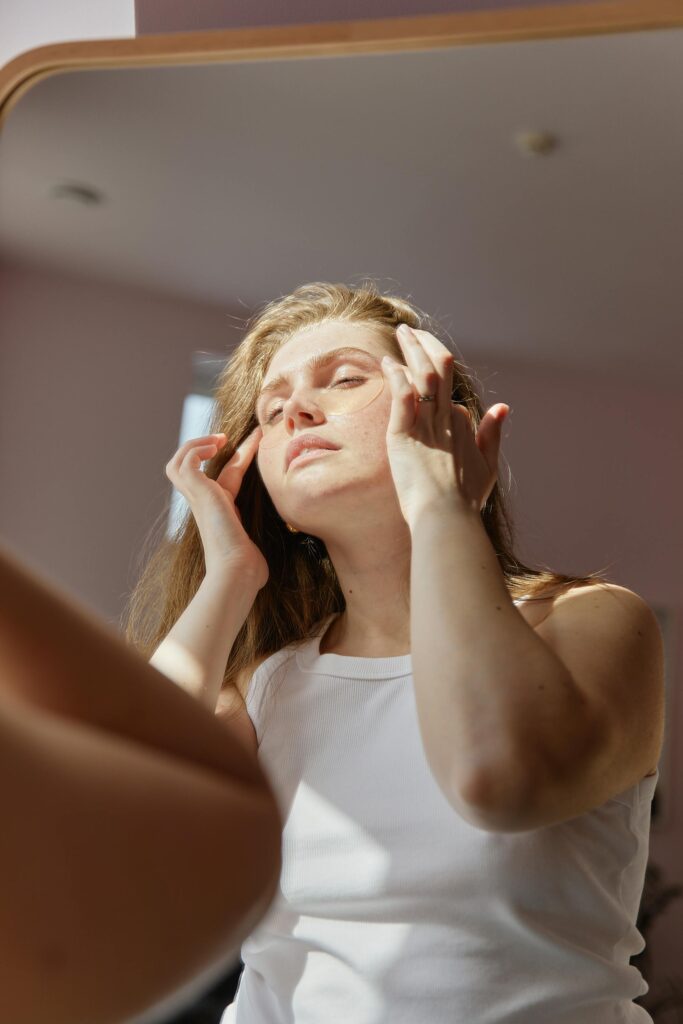
Not every rough patch needs exfoliating. Sometimes the skin is inflamed, and glycolic acid can make it worse.
What does glycolic acid do to the skin?
Glycolic acid is an alpha hydroxy acid, usually shortened to AHA. The outermost part of your skin contains flattened cells called corneocytes. Microscopic junctions called corneodesmosomes hold these cells together until enzymes gradually break the junctions down and allow the cells to shed.
Glycolic acid reduces the cohesion between corneocytes, helping them detach more easily. In one human skin study, a 4% glycolic acid formula increased the breakdown of corneodesmosomes in the upper stratum corneum. Researchers did not detect damage to deeper barrier structures under the conditions tested. That finding applies to the specific 4% formula used in the study. Another product with the same percentage may behave differently. (Fartasch et al., 1997)
When I assess a glycolic acid product, its concentration is only the starting point. Product pH affects how much glycolic acid remains in the form that can enter the stratum corneum. The base carrying the acid also affects delivery, while frequency and contact time determine how much exposure the skin receives. Laboratory research found that glycolic acid penetrated more readily when its concentration increased and the pH decreased. (Jiang and Qureshi, 1998)
This means two products labelled 7% glycolic acid can produce different results. A rinse-off scalp treatment, an alcohol-based facial toner and a body cream do not deliver glycolic acid in the same way.
I explain this ingredient in more detail in What Is Glycolic Acid, and How Does It Benefit Skin?
Formulation note: The percentage tells you how much glycolic acid is present. It cannot tell you how much acid reaches the skin in a form that can penetrate.
Can glycolic acid help scalp psoriasis?
Glycolic acid may help lift the scale from a psoriasis plaque. It cannot control the immune inflammation that keeps producing the plaque.
Inflammatory signals in psoriasis make epidermal cells develop and move towards the surface too quickly. The cells arrive before normal maturation and shedding are complete, creating the thick, adherent scale associated with psoriasis.
One small clinical study tested an AHA scalp lotion in 20 adults with scalp psoriasis or seborrhoeic psoriasis. Participants applied coded lotions twice daily for up to eight weeks. The AHA lotion improved the treated areas, and the best response occurred when researchers used it with a betamethasone scalp preparation. (Kostarelos et al., 2000)
This paper is easy to misquote. The abstract calls the preparation a 10% glycolic acid lotion, while the methods report a formula containing 5% glycolic acid and 5% lactic acid at pH 3.5.
Because the lotion contained two acids, we cannot separate the effect of glycolic acid from the effect of lactic acid. The study was also small, included two scalp diagnoses and excluded people with severely irritated or highly inflamed skin.
What can we reasonably take from it? A purpose-made glycolic-lactic acid scalp lotion may help when scale is thick and the scalp is not acutely inflamed. The paper does not justify using an ordinary facial toner as psoriasis treatment.
Salicylic acid has a better-established role as a scale softener in scalp psoriasis. The American Academy of Dermatology explains that it can soften thick plaques and help other treatments reach the scalp. Topical corticosteroids are commonly prescribed because they reduce the inflammation producing the redness, itching and scale. (AAD scalp psoriasis guidance)
If scale is preventing a prescribed lotion from reaching your scalp, ask whether a separate scale-softening product would help. Do not mix a cosmetic glycolic acid product into prescription medication. That would not reproduce the formula or dosing used in the study.
Is glycolic acid safe for eczema?
During active atopic eczema, I would leave glycolic acid out.
The word “eczema” covers several conditions. Atopic dermatitis, allergic contact dermatitis, irritant contact dermatitis and seborrhoeic dermatitis have different causes. In this section, I am talking mainly about atopic eczema.
The stratum corneum normally slows water loss and restricts the entry of irritating substances. In atopic eczema, changes in epidermal proteins and lipids make that protection less effective. Water escapes more readily, while irritants can penetrate more easily. Immune inflammation and scratching then add further damage.
The flakes seen during an eczema flare are part of an inflamed barrier problem. They are not simply spare surface cells waiting to be exfoliated.
Glycolic acid helps corneocytes separate. Applying it to skin that is already itchy, cracked or sore can increase burning and dryness without treating the inflammation underneath.
Current atopic-dermatitis guidance supports moisturisers and established anti-inflammatory medicines, including topical corticosteroids and topical calcineurin inhibitors. Glycolic acid has no established role in controlling atopic eczema. (AAD atopic dermatitis guideline, AAD treatment guidance)
What if your eczema is fully settled, but the skin still feels rough? Some people may tolerate a low-strength glycolic acid formula between flares. Tolerating a product does not show that the product treats eczema. Research has not demonstrated that glycolic acid repairs the atopic barrier, prevents another flare or improves long-term disease control.
Lactic acid and polyhydroxy acids are often promoted as gentler choices. The finished formula determines how an acid behaves on skin, and either ingredient can still sting. Neither should be presented as eczema therapy.
For a closer explanation of the lipids that help the stratum corneum retain water, read Ceramides in Skincare: What the Science Really Says.
If glycolic acid burns on an area of eczema, wash it off and stop using it there. Painful, weeping or crusted eczema needs medical assessment because infection can develop when the barrier is damaged.
Can glycolic acid help ingrown hairs and razor bumps?
Here, glycolic acid has actually been tested in people.
The available studies examined pseudofolliculitis barbae, commonly called razor bumps. After a close shave, a curved hair may emerge from the follicle and bend back into nearby skin. In other cases, the cut hair pierces the follicular wall before it reaches the surface. The skin reacts to the embedded hair as a foreign body, producing papules and sometimes pustules.
Two placebo-controlled studies involving 35 adult men found that topical glycolic acid reduced pseudofolliculitis barbae lesions by more than 60% on the treated side. (Perricone, 1993)
There are important limits. The research was published in 1993 and involved a small group of men with beard-area razor bumps. It does not tell us whether glycolic acid works equally well after waxing the legs, shaving the underarms or removing pubic hair.
Why might it help? Reducing compacted cells around the hair opening may help a trapped hair emerge and leave less resistance near the skin surface. Glycolic acid cannot change the curve of the hair or prevent a close shave from cutting it below the surrounding skin.
When you apply it also affects irritation. Shaving causes microscopic mechanical damage even when the skin looks normal. Applying a low-pH leave-on acid immediately afterwards exposes the freshly disturbed stratum corneum to another irritant.
Research does not provide a universal waiting time. Let the area return to its usual colour and wait until tenderness, warmth and prickling have resolved. If the skin still feels irritated, skip the acid.
Repeated irritation can also leave darker post-inflammatory marks. Glycolic acid may gradually improve superficial pigmentation by increasing epidermal shedding, but irritation can stimulate further pigment production. Using more product or applying it more frequently may work against the intended result.
I discuss pigmentation treatments in Best Active Ingredients for Uneven Skin Tone.
Is glycolic acid or salicylic acid better?
If the problem is thick scalp scale, salicylic acid has the better-supported role in dermatology guidance. The clinical evidence for glycolic acid comes from one small study of a lotion containing two AHAs. Neither acid suppresses the inflammation causing psoriasis.
Razor bumps give us a different comparison. Glycolic acid has direct placebo-controlled evidence for pseudofolliculitis barbae. Salicylic acid is also used as a keratolytic, but the research discussed here does not include a head-to-head trial showing that one works better.
Active atopic eczema changes the question completely. Choosing between glycolic acid and salicylic acid will not address the inflamed, permeable barrier. Neither exfoliant belongs on skin that is cracked, weeping or actively flaring.
How to use glycolic acid more safely on the scalp or body
Choose a product developed for the area you want to treat. A facial toner does not become a scalp treatment because the glycolic acid percentage looks suitable.
Apply it only to intact skin. Cracks, bleeding, open pustules and recent shaving irritation allow an acidic product to penetrate more easily and increase the chance of burning.
If you are introducing glycolic acid, avoid adding a new retinoid, scrub or hair-removal method at the same time. When several exposures change together, identifying the cause of a reaction becomes difficult.
Brief tingling can occur on intact skin because the product is acidic. Persistent burning, increasing redness or swelling is different. Wash the product off and stop applying it to that area.
I explain product strength, frequency and routine combinations in How to Use Glycolic Acid Safely.
AHA use can also increase the skin’s response to ultraviolet radiation. FDA-sponsored human research found greater sensitivity to UV-induced redness after four weeks of AHA use, although the response varied between participants. The FDA recommends sunscreen, protective clothing and reduced sun exposure during AHA use and for one week after stopping. (FDA alpha hydroxy acid guidance)
This deserves particular attention when glycolic acid is being used to improve post-inflammatory pigmentation. UV exposure can darken existing marks, while irritation from the acid can create further inflammation.
Frequently asked questions
Can I use a 7% glycolic acid toner on my scalp?
A 7% facial toner was not tested in the scalp-psoriasis study. The researchers used a purpose-made lotion containing 5% glycolic acid and 5% lactic acid at pH 3.5. A facial toner may have a different pH, solvent system and delivery profile.
Can glycolic acid be combined with psoriasis medication?
The small scalp study found its best results when the AHA lotion was used with betamethasone. That finding cannot be turned into instructions for mixing a cosmetic acid with prescription medicine. Ask your prescriber or pharmacist whether the products can be used in the same routine and how they should be separated.
Can I use glycolic acid when my eczema is calm?
Some eczema-prone skin may tolerate a low-strength formula once the area has completely settled. There is still no evidence that glycolic acid treats the eczema itself. Test a small area first and stop if itching, redness or burning develops.
How long should I wait after shaving?
Research has not established a fixed number of hours. Wait until shave-related warmth, tenderness, redness and prickling have resolved. Reactive skin may tolerate glycolic acid better when shaving and acid use occur on different days.
Can glycolic acid worsen dark marks from ingrown hairs?
Yes, if it causes irritation. Glycolic acid can increase the shedding of pigmented surface cells, but inflammation can stimulate further pigment production. More frequent use does not guarantee faster fading.
When do scalp flakes or razor bumps need medical assessment?
Seek assessment if the diagnosis is uncertain, scalp plaques bleed or cause hair loss, or bumps become painful, pus-filled or scar-forming. Persistent scalp flaking can come from psoriasis, seborrhoeic dermatitis, contact dermatitis or another scalp condition. The correct treatment depends on the diagnosis.
The bottom line
Glycolic acid can reduce shaving-related razor bumps, although the human studies were small and confined to the beard area. This is the only one of these three concerns with direct clinical evidence for glycolic acid alone.
A glycolic-lactic acid scalp lotion also helped people with scalp psoriasis in one small study. That gives glycolic acid a possible supporting role in loosening scale, but it cannot replace treatment for the inflammation producing the plaque.
Active atopic eczema has little to gain from exfoliation. The flakes come from inflammation and impaired barrier function, while an acidic product can add further irritation.
The common mistake is treating every rough surface as excess dead skin. Sometimes surface cells are contributing to the problem. In other cases, the roughness is a sign of inflammation that needs to be controlled rather than exfoliated.
Thanks for reading.
Which use of glycolic acid should I examine next: keratosis pilaris, underarms, body odour or post-acne marks?
If you want skincare explained by a formulation scientist, follow DrBeautiology for new evidence-based skin education.
Talk to you soon!
Dr Bozica